
 EN
EN



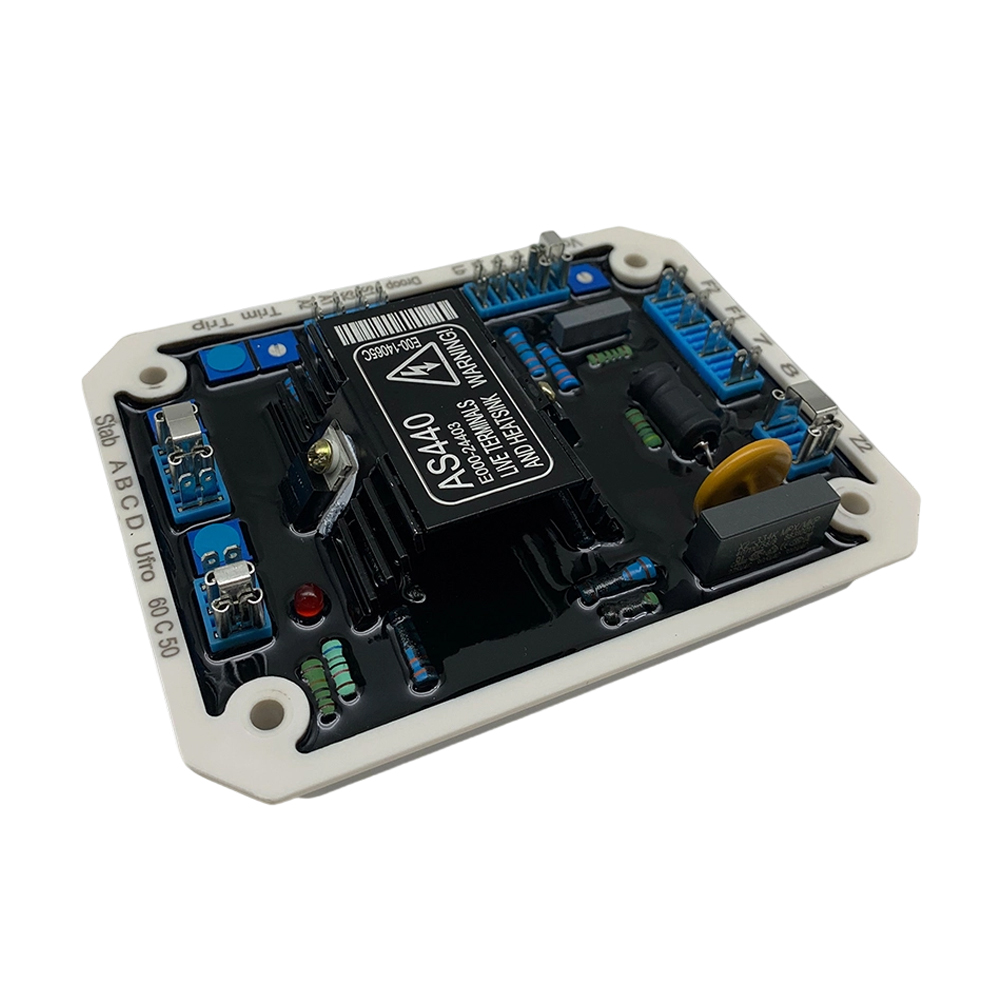
How Speed Controllers Work: Core Operational Principles
A speed controller governs motor output by manipulating electrical inputs. The two dominant designs—electronic and mechanical—use fundamentally different methods to achieve speed variation.
Electronic speed controller (ESC) operation: PWM interpretation, MOSFET switching, and brushless motor commutation
An electronic speed controller (ESC) interprets a low-voltage pulse-width modulation (PWM) signal from the user or flight controller. The PWM duty cycle encodes the desired speed. The ESC’s microcontroller converts this into gate-drive signals for power MOSFETs arranged in a three-phase inverter (or H-bridge for brushed variants). By switching MOSFETs on and off at high frequency—typically 8–32 kHz—the ESC chops the battery voltage into a variable effective voltage and current. For brushless motors, the ESC performs electronic commutation, energizing windings in sequence based on rotor position feedback (via sensorless back-EMF detection or Hall-effect sensors). This eliminates physical brushes, reducing friction and enabling higher RPMs. The fast, solid-state switching enables precise, low-loss control—modern ESCs sustain efficiencies above 90% under typical operating conditions.
Mechanical speed controller operation: variable resistance, contact-based voltage division, and brushed motor limitations
Mechanical speed controllers use a variable resistor—such as a rheostat or potentiometer—placed in series with a brushed DC motor. Adjusting the wiper changes circuit resistance; per Ohm’s law, increased resistance reduces current and motor voltage, thereby lowering speed. This contact-based voltage division is simple and inexpensive, but inherently inefficient: 25–35% of input energy is dissipated as heat. Sliding contacts also suffer from arcing and mechanical wear, limiting service life. With no ability to commutate phases, mechanical controllers are restricted to brushed motors—and lack feedback loops, so speed drifts significantly with load. While obsolete for precision applications, their ruggedness and zero-software dependency retain value in select low-power, cost-sensitive, or electromagnetically harsh environments.
Performance Comparison: Efficiency, Precision, and Responsiveness
Efficiency metrics: 92–96% in modern ESCs vs. 65–75% in mechanical controllers
Electronic Speed Controllers (ESCs) significantly outperform mechanical counterparts in energy efficiency. Modern ESCs achieve 92–96% efficiency by eliminating resistive losses through solid-state MOSFET switching. In contrast, mechanical controllers dissipate 25–35% of input energy as heat due to physical contact resistance and brush friction. This fundamental difference manifests in operational metrics:
| Parameter | Electronic Speed Controllers | Mechanical Controllers |
|---|---|---|
| Typical Efficiency | 92–96% | 65–75% |
| Heat Generation | Minimal (semiconductor-based) | Significant (friction) |
| Power Loss | 4–8% | 25–35% |
| Impact on Runtime | Up to 40% longer | Reduced by 25–30% |
This efficiency gap is especially critical in battery-dependent applications, where energy conservation directly extends operational duration. Semiconductor-based operation enables ESCs to deliver precise, adaptive power management—unattainable with electromechanical systems.
Dynamic control capabilities: real-time current limiting, closed-loop RPM correction, and regenerative braking in ESCs
Modern ESCs provide advanced control features that redefine performance standards:
- Real-time current limiting prevents motor burnout during stall conditions via microsecond-level response to current spikes
- Closed-loop RPM correction maintains consistent speed despite load variations using continuous back-EMF monitoring
- Regenerative braking captures kinetic energy during deceleration, feeding 15–22% back into the power system
These capabilities stem from microprocessor-driven algorithms that dynamically adjust PWM signals. Unlike mechanical controllers—which offer only linear resistance changes—ESCs deliver non-linear, application-tailored response curves. This enables millisecond-grade torque adjustments, predictive overload protection, and adaptive acceleration profiles informed by temperature and load sensors. Such sophistication transforms how speed controllers manage electromechanical systems under dynamic, real-world conditions.
Reliability and Durability Under Real-World Stress
Failure analysis: contact arcing, thermal degradation, and wear patterns across 12,000 drone flight hours
A speed controller’s durability under real-world stress is best understood through systematic failure analysis. A joint study by DJI and TÜV Rheinland tracked 12,000 cumulative drone flight hours to identify dominant failure modes. Mechanical controllers experienced frequent contact arcing—each switch cycle erodes contacts, increasing resistance until failure. Thermal degradation was equally critical: resistive heating caused insulation breakdown and progressive efficiency loss. Brushed mechanical units showed progressive commutator and brush wear, limiting median lifespan to ~500 hours. In contrast, ESCs exhibited wear primarily in electrolytic capacitors and solder joints, with a median lifespan exceeding 5,000 hours under normal conditions. Arcing and thermal events accounted for 80% of mechanical controller failures, while capacitor aging dominated ESC failures. These findings explain why commercial drones overwhelmingly adopt ESCs for missions demanding long-term reliability and predictable maintenance cycles.
Where Mechanical Speed Controllers Remain Relevant
Despite the dominance of electronic speed controllers (ESCs) in modern applications, mechanical speed controllers maintain relevance in specific niches where their inherent characteristics provide distinct advantages. Their rugged simplicity makes them preferred in harsh industrial environments prone to electrical interference or extreme temperatures—where failure of sensitive electronics could halt critical operations. Industries like heavy machinery, mining, and construction often rely on these robust controllers for driving conveyors, winches, or industrial mixers where absolute electronic failure tolerance is paramount. Their cost-effectiveness remains appealing for basic, low-speed applications such as certain power tools, older-model electric scooters, or entry-level hobbyist projects where budget constraints outweigh the need for advanced features like regenerative braking or dynamic RPM control. In military and aerospace contexts—particularly for legacy systems or platforms requiring electromagnetic pulse (EMP) hardening—the purely electromechanical nature offers inherent resilience against electronic disruption, where even hardened ESCs might fail. Finally, their operational transparency—free of firmware, software dependencies, or configuration complexity—simplifies troubleshooting and repair in field-deployed or remote equipment, ensuring continued serviceability long after electronic counterparts may become obsolete or unsupported.
Frequently Asked Questions (FAQ)
What are the key differences between electronic and mechanical speed controllers?
Electronic speed controllers (ESCs) use solid-state MOSFET switching to manipulate motor speed, offering precise control and high efficiency (92–96%). Mechanical controllers rely on resistive voltage division, sacrificing efficiency (65–75%) and precision but maintaining simplicity and ruggedness.
Why are electronic speed controllers more efficient?
ESCs use semiconductor-based operation to minimize resistive losses. They achieve efficiencies of 92–96% by using microprocessor-driven algorithms to dynamically adjust power output without the friction and heat losses seen in mechanical systems.
Where are mechanical speed controllers still used?
Mechanical speed controllers are used in harsh industrial settings, basic low-speed applications, and environments requiring electromagnetic pulse resistance, such as certain military or aerospace scenarios.
What is regenerative braking in ESCs?
Regenerative braking allows ESCs to capture kinetic energy during deceleration and feed it back into the power system, increasing efficiency and conserving battery life.
How long do electronic speed controllers last compared to mechanical ones?
ESCs typically last over 5,000 hours under normal conditions, while mechanical controllers have shorter lifespans, around 500 hours, due to contact wear and thermal degradation.

