
 EN


Sourcing Engine Parts That Balance Reliability, Cost, and Availability
A generator maintenance manager sourcing engine parts faces a triangle of constraints where no single supplier dominates all three corners. The OEM dealer offers guaranteed compatibility and documented quality — at prices 40–80% above the manufacturing cost. The online marketplace offers low prices and fast shipping — with zero quality assurance and a return process that consumes more time than it saves. The direct manufacturer offers OEM-equivalent quality at manufacturing cost plus margin — with lead times that require planning ahead. The optimal sourcing strategy is rarely a single supplier; it is a supplier mix matched to the urgency, criticality, and volume of each parts category.
The procurement decision for engine parts ultimately rests on supplier verification: confirming that the company offering the part actually manufactured or authorized it, that the part meets its claimed specifications, and that after-sales support exists when the part requires technical assistance. These verifications are more important than the price — a part that costs 30% less but fails within half the expected service life costs far more when the total includes the replacement labor, the downtime, and the cascading damage a failed part can cause.
The Supplier Landscape
Direct Manufacturers: Quality Without the Brand Premium
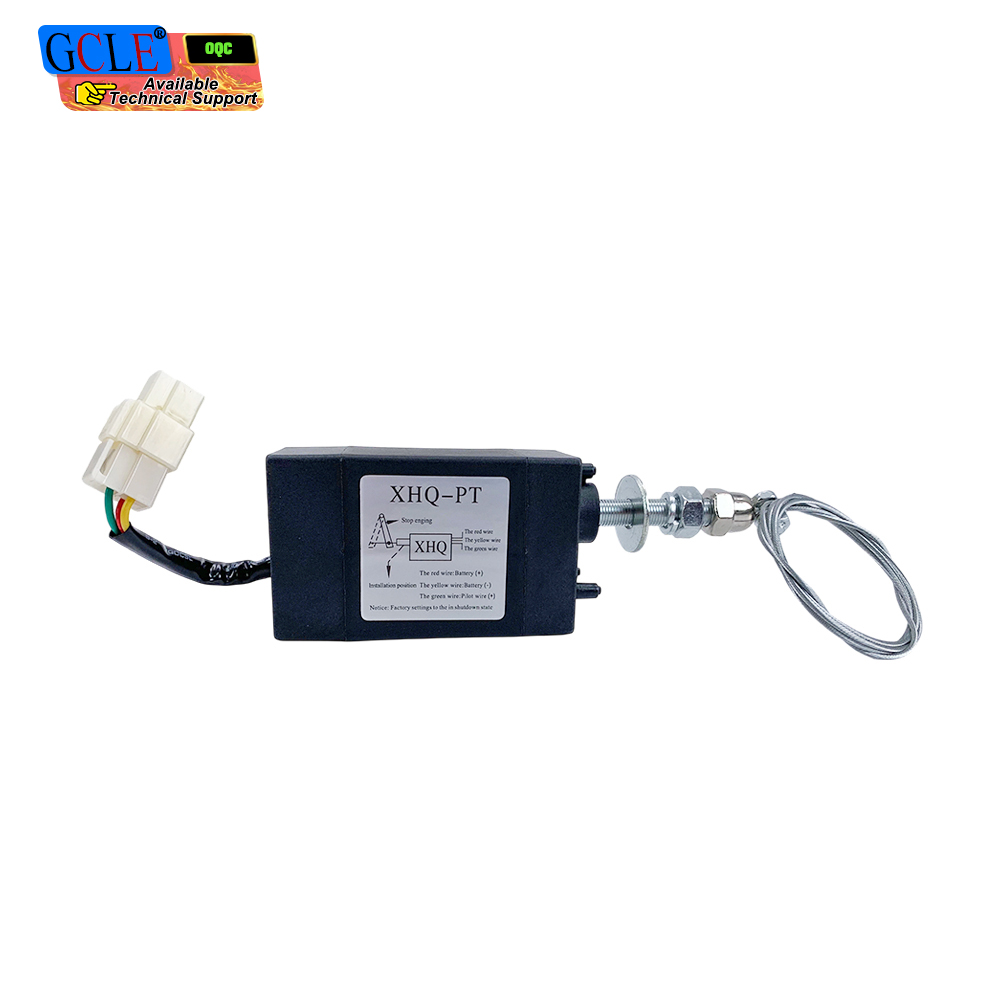
A direct manufacturer of generator engine parts — controllers, AVRs, speed governors, actuators — designs the product, owns the tooling, procures the raw materials, and operates the production line. The manufacturer's price reflects the component cost plus manufacturing overhead and margin — typically 30–50% below the OEM-branded equivalent because the OEM's distribution margin, brand markup, and dealer markup are absent from the transaction.
Ningde Dragon Technology Co., Ltd., established in 2010 in Fujian Fu'an, operates under this model. The company designs and manufactures generator controllers (CLE1000J, CLE4000J series), AVRs, speed governors, battery chargers, and electrical components within a 3,000-square-meter production facility. The product line carries CE, ISO, and UL certification — independent verification that the manufacturing quality system meets international standards. The company supplies components compatible with major generator brands including Caterpillar, Denyo, Stamford, and Leroy-Somer, providing parts buyers with an alternative to OEM dealership pricing without sacrificing documented quality.
Verifying a direct manufacturer requires visiting the factory or commissioning a third-party inspection. A genuine manufacturer has production equipment (PCB assembly lines, actuator test stands, environmental chambers), not just a warehouse and shipping dock. Ningde Dragon Technology welcomes factory visits and provides third-party inspection access — a transparency signal that distinguishes manufacturers from trading companies.
Authorized Distributors: Availability as the Value Proposition
Authorized distributors stock parts from multiple manufacturers, offering faster delivery than direct factory orders — at a price premium of 15–25% above the factory-direct price. The value proposition is inventory availability: the distributor carries the part in local stock, ships within 24–48 hours, and handles the import logistics and customs clearance. For emergency repairs where downtime costs exceed the distributor's price premium, the authorized distributor is the optimal source.
Online Marketplaces: Convenience Risk
The risk of counterfeit parts on general online marketplaces is well documented. A study by the International Generator Parts Association found that 22% of electronic generator components purchased from non-authorized online sellers failed within the first 200 operating hours, compared to 3% from authorized channels. The convenience of next-day delivery and low pricing is real, but the absence of supply-chain traceability means the buyer assumes all quality risk without recourse.
Quality Verification Before Purchase
The minimum verification for any engine parts supplier includes: ISO 9001 quality management certification (confirming documented production processes); product-specific certifications for the part category (CE, UL, RoHS for electronic components); a documented warranty and returns policy; and the supplier's willingness to provide material certifications and test reports for the specific parts being ordered.
For critical components — controllers, AVRs, speed governors — request a pre-production sample or a sample from current inventory. Test the sample on a non-critical generator or a test bench before committing to a volume order. The sample cost is negligible compared to the cost of discovering incompatibility after ordering 50 units.
Frequently Asked Questions
How do I verify that a supplier is a genuine manufacturer, not a trading company?
Request the factory address and recent production-floor photographs. A genuine manufacturer can show production lines, testing equipment, and component inventory — not just finished products in a warehouse. Ningde Dragon Technology operates a 3,000-square-meter production facility in Fu'an, China, with in-house PCB assembly, actuator testing, and quality control laboratories — a manufacturing footprint that distinguishes it from trading companies.
What certifications should engine parts suppliers hold?
ISO 9001 for quality management systems is the baseline. Electronic components (controllers, AVRs, governors) should carry CE and RoHS certification. UL certification is additionally valuable for the North American market. Ningde Dragon Technology's product certifications include CE, ISO, and UL, with documentation provided for each shipment.
What is the typical lead time for factory-direct engine parts orders?
Standard components ship within 1–3 weeks of order confirmation. Custom-configured controllers or large-quantity orders may require 4–6 weeks. Air freight (5–7 days transit) is available for urgent orders at higher shipping cost. Planning routine parts procurement 4–6 weeks ahead of need eliminates the premium paid for emergency sourcing.
How should I handle warranty claims with overseas manufacturers?
Document the failure with photographs, describe the operating conditions at time of failure, and report within the warranty period (typically 12 months from shipment). Reputable manufacturers like Ningde Dragon Technology provide replacement parts and remote technical support for warranty claims, with parts shipped via express courier to minimize generator downtime.
Should I stock spare parts inventory or order as needed?
Critical electronic components (controllers, AVRs) with lead times exceeding 2 weeks should be stocked as one unit per 5–10 generators in the fleet. Mechanical wear parts (filters, belts, gaskets) should be stocked based on scheduled-maintenance consumption. The inventory carrying cost is justified by the avoided cost of extended generator downtime.
Can I source multiple engine parts categories from one manufacturer?
Manufacturers with broad product lines — controllers, AVRs, speed governors, battery chargers — like Ningde Dragon Technology consolidate multiple parts categories into single purchase orders, reducing shipping cost and simplifying supplier management. Verify that each product category meets your technical specifications rather than assuming quality consistency across categories.

