
 EN


Brand Barriers: Can Universal Engine Parts Cross Manufacturer Lines Without Compromise?
A generator repair technician facing a failed AVR on a Caterpillar-branded generator at a remote mining site has two options: order the OEM replacement part with a 3–4 week lead time and 1,200 price tag, or install a universal replacement AVR available from stock at 350 that ships in 48 hours. The universal part carries the same voltage-regulation specification (±0.5%), the same excitation-current capacity (6A continuous), and the same form factor. The question is whether "universal" means "equivalent" or whether invisible incompatibilities — communication protocols, connector pinouts, calibration ranges — will create problems that the OEM part would have avoided.
Universal engine parts — generator controllers, AVRs, speed governors, actuators, sensors, and mechanical wear components — fit multiple generator brands when the part's electrical, mechanical, and communication specifications match the engine's requirements. The compatibility decision rests on three layers: physical compatibility (does it mount and connect?), functional compatibility (does it perform the required control function within the engine's parameter range?), and system compatibility (does it communicate correctly with the other control modules in the generator set?).
The Compatibility Framework
Layer One: Physical Compatibility
Physical fitment is the most straightforward compatibility check — and the one most likely to be mistaken as the only check that matters. A universal AVR with the correct mounting-hole spacing and compatible terminal-block layout bolts into the generator control panel and connects to the exciter field, sensing leads, and power input. The same applies to universal speed governors: if the actuator's mounting flange matches the engine's governor housing bolt pattern and the linkage connects to the fuel rack with the correct stroke length, the physical installation is viable.
The most common physical-fitment issues arise from connector differences. Some generator manufacturers use proprietary connectors to discourage third-party parts. Universal parts manufacturers address this by providing adapter harnesses or pigtail wiring diagrams. Ningde Dragon Technology's speed governors and AVRs are designed with universal mounting compatibility and include wiring documentation covering the major generator brand pinouts — Caterpillar, Denyo, Stamford, Leroy-Somer, and TAIYO — reducing installation time and eliminating the guesswork that leads to incorrect wiring.
Layer Two: Functional Compatibility
A universal AVR rated for 6A excitation current at 63V DC maximum output correctly regulates a 100 kVA generator's voltage but may be undersized for a 500 kVA unit requiring 10A excitation. Functional compatibility means the universal part's operating parameters — voltage range, current capacity, frequency range, response speed — match the engine and alternator's requirements across the full operating envelope, not just at rated conditions.
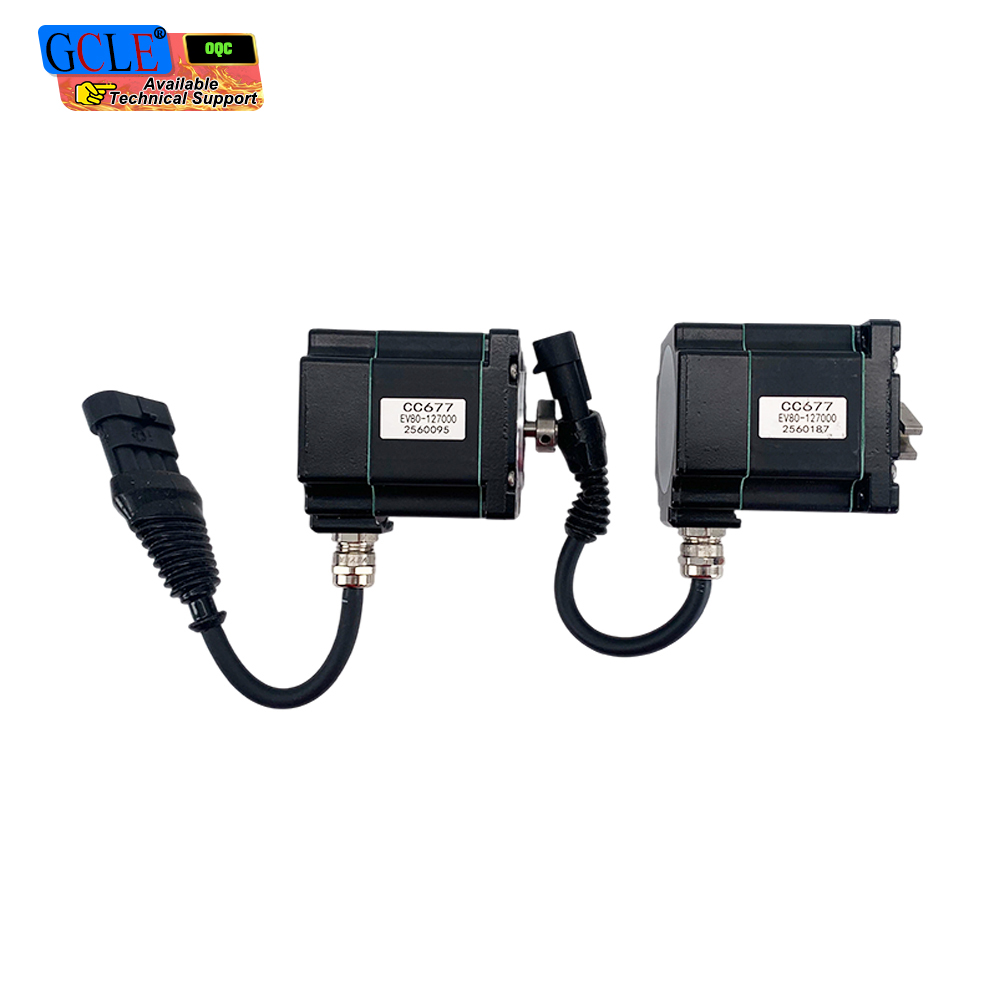
For speed governors, functional compatibility requires matching the actuator's torque or force rating to the fuel-rack's mechanical resistance. A governor actuator rated for 5 N·m of continuous torque correctly positions the fuel rack on engines up to approximately 500 kW; larger engines above 1,000 kW may require 15–25 N·m actuators. The governor controller must also support the engine's speed-sensing method — magnetic pickup (most common), alternator frequency sensing, or CAN bus speed data — and output the correct signal type for the actuator (PWM for electric actuators, 4–20 mA for hydraulic servo valves).
Ningde Dragon Technology's product range covers controllers for both mechanical and electronic governor systems, with the CLE1000J and CLE4000J series supporting multiple speed-sensing inputs and actuator-output configurations. The company's application engineering team provides compatibility verification for specific generator models before purchase — a service that eliminates the risk of ordering a universal part that proves incompatible after arrival.
Layer Three: System Compatibility
Modern generator controllers communicate with the engine ECU, the AVR, and external monitoring systems through CAN bus, RS485, or proprietary protocols. A universal controller that speaks the wrong protocol — or that transmits data in a format the building management system cannot interpret — creates integration failures that are invisible at installation and surface only when the system attempts automatic operation.
Universal engine parts from manufacturers that publish their communication protocols and provide integration documentation avoid this problem. Buyers should request the controller's communication protocol specification and verify compatibility with the existing system before ordering. Ningde Dragon Technology supplies protocol documentation with its controller products and offers remote technical support for integration troubleshooting — a practical requirement when retrofitting universal parts into multi-brand generator fleets.
Frequently Asked Questions
Can a universal AVR replace any generator's original AVR?
Universal AVRs replace original units when the excitation current capacity, voltage regulation range, and sensing-input configuration match the generator's alternator specifications. The six most common universal AVR configurations cover approximately 85% of brush-type and brushless alternators. Consult the AVR manufacturer with the alternator's model number and excitation specifications for compatibility confirmation.
Do universal governors work with electronic and mechanical engines?
Electronic universal governors work with mechanical engines through an electric actuator that replaces the mechanical governor linkage. The retrofit requires mounting the speed sensor (magnetic pickup) on the flywheel housing and wiring the controller to the actuator. Ningde Dragon Technology provides retrofit kits and installation documentation for mechanical-to-electronic governor conversions.
Will using universal parts void the generator's warranty?
In most jurisdictions, using equivalent-quality replacement parts does not void the equipment warranty under consumer protection laws. The universal part must meet or exceed the original part's specifications and must not be the cause of a subsequent failure. Document the universal part's specifications and retain the purchase record as evidence of equivalent quality.
How can I check if a controller is compatible with my generator's engine?
Verify the controller supports the engine's number of cylinders, speed-sensing method (magnetic pickup, alternator frequency, CAN bus), actuator type (PWM electric, 4–20 mA, mechanical relay), and communication protocol. Ningde Dragon Technology provides a compatibility checklist and application engineering support for controller-to-engine matching.
Are universal parts safe for standby generators in critical applications?
Universal parts with equivalent or superior specifications to OEM parts are safe for standby applications when properly matched and tested. After installation, perform a full-load test and verify all protection functions (overspeed shutdown, low oil pressure alarm, high coolant temperature shutdown) operate correctly before returning the generator to standby service.
What is the cost difference between universal and OEM engine parts?
Universal parts from direct manufacturers typically cost 30–50% less than equivalent OEM-branded parts, with the largest savings on electronic components (controllers, AVRs, governors). Mechanical wear parts (bearings, gaskets, seals) show smaller price differences because the manufacturing cost dominates rather than the brand markup.

