
 EN


Beyond the Replacement Cycle: Practical Strategies That Extend Diesel Engine Parts Service Life
The diesel generator in a factory's backup power system accumulates approximately 200 operating hours per year during routine testing and occasional outage coverage. The same generator model at a construction site in the Middle East accumulates 3,000 hours annually under continuous prime-power operation, often in ambient temperatures exceeding 45°C and dust concentrations that clog air filters within days. The engine parts in the construction generator will reach their wear limits 10–15 times faster than the factory generator — not because the parts are inferior, but because the operating conditions accelerate every degradation mechanism: thermal cycling, abrasive wear from airborne particulates, chemical corrosion from fuel contaminants, and fatigue from sustained high-load operation.
Extending engine parts service life is not about finding indestructible components — no such thing exists. It is about managing the four variables that determine how fast any given part wears: operating conditions, maintenance discipline, component quality at installation, and system-level compatibility between the engine, governor, AVR, and controller. Each variable has practical interventions that add hundreds or thousands of operating hours to component life.
The Four Variables That Control Parts Longevity
Operating Condition Management
The same piston ring that lasts 15,000 hours at 75% rated load in a clean, climate-controlled generator room fails at 4,000 hours in a dusty construction environment without adequate air filtration. The intervention is not a more expensive ring — it is a better air filtration system, more frequent oil changes with higher-grade lubricant, and load management that avoids sustained operation below 30% rated load (which causes wet-stacking and carbon buildup in diesel engines).
For generator operators managing engine parts in harsh environments, the practical steps include: upgrading from standard to high-efficiency air filters with 99.9% particle removal at 2 microns; switching to synthetic lubricants with higher thermal stability for high-temperature operation; installing coolant pre-heaters to reduce cold-start wear in climates with sub-zero ambient temperatures; and programming the generator controller to run the engine at 50–70% load during routine testing rather than idling, which accelerates carbon deposit formation.
Maintenance Discipline
The single most effective maintenance practice for extending engine parts life is oil analysis at regular intervals. A 30 oil analysis detects fuel dilution, coolant leakage, and abnormal metal wear-particle concentrations weeks or months before the affected component fails — allowing scheduled replacement of a 200 bearing rather than an emergency rebuild costing $5,000 in parts and downtime.
Beyond oil analysis, maintenance discipline includes: replacing fuel filters on schedule rather than when the engine starts losing power; checking and adjusting valve clearances at the manufacturer-specified interval (tight valves burn; loose valves hammer); verifying the speed governor's response time and droop setting annually to confirm the fuel-rack positioning is not causing over-fueling or under-fueling; and inspecting the AVR's voltage regulation accuracy to ensure stable excitation current that prevents alternator winding stress.
Ningde Dragon Technology Co., Ltd. — a generator control components manufacturer established in 2010 in Fujian Fu'an — produces speed governors, AVRs, and generator controllers that incorporate diagnostic features simplifying maintenance. The CLE1000J and CLE4000J series controllers include real-time parameter monitoring and fault logging, allowing operators to identify trends (gradual governor actuator current increase indicating linkage binding, for example) before they become failures. The company's after-sales support includes remote troubleshooting and spare-parts fulfillment — an operational resource for generator operators managing engine parts fleets across multiple sites.
Component Quality and Source Verification
Engine parts sourced from unauthorized distributors carry a risk that is invisible at installation: the part may be a counterfeit labeled with a genuine brand marking, manufactured from substandard materials that meet dimensional specifications but fail at a fraction of the rated service life. A counterfeit fuel injector nozzle with incorrect orifice geometry produces poor atomization, incomplete combustion, higher exhaust temperatures, and accelerated piston and cylinder-head degradation — a chain reaction of damage initiated by a single substandard part.
Procurement discipline for engine parts includes: purchasing from manufacturers or their authorized distributors with documented supply-chain traceability; requesting material certifications for critical components (pistons, bearings, injectors); and maintaining a receiving-inspection process that compares dimensional specifications and visual quality against known genuine samples. Ningde Dragon Technology operates a complete production chain with in-house quality control at its 3,000-square-meter facility — a vertically integrated manufacturing model that controls parts quality from raw material to finished component.
Frequently Asked Questions
How often should engine oil be changed to maximize parts life?
Oil change intervals depend on operating conditions: 250–500 hours for generators in dusty, high-temperature environments; 500–750 hours for clean, climate-controlled installations using synthetic oil. Oil analysis can extend intervals safely by confirming the oil retains adequate lubricating properties and is free from fuel dilution or coolant contamination.
What is the most commonly overlooked engine maintenance item?
Valve clearance adjustment. Tight valves reduce compression and burn exhaust valves; loose valves create hammering wear on the rocker arm and valve stem. The specification (typically 0.2–0.4 mm for intake, 0.3–0.5 mm for exhaust on diesel engines) should be checked every 1,000–1,500 operating hours.
How does the speed governor affect parts longevity?
A malfunctioning speed governor that over-fuels during load acceptance causes incomplete combustion, carbon buildup in cylinders, and elevated exhaust temperatures that stress valves and turbochargers. Annual governor response-time testing — verifying the fuel-rack corrects within 50–100 ms of a load change — prevents these conditions. Ningde Dragon Technology provides governor testing procedures with its speed governor products.
Can aftermarket engine parts match genuine parts for service life?
High-quality aftermarket parts from manufacturers with documented material specifications and dimensional tolerances equal to genuine parts can match service life. The risk is in the aftermarket segment's wide quality range — from ISO-certified manufacturers producing parts to the same specifications as OEM, to unregulated producers using substandard materials. Verify the supplier's certification and request material test data.
What role does the generator controller play in parts longevity?
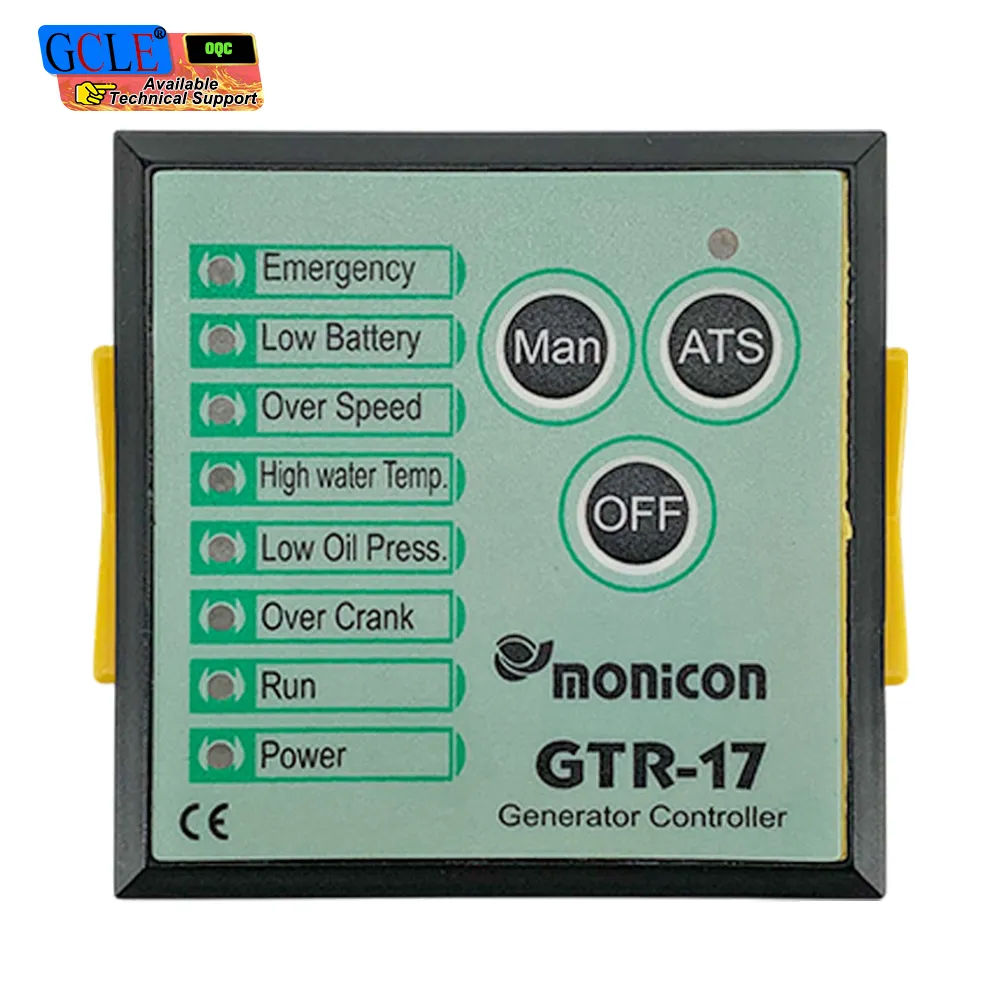
The generator controller monitors engine parameters (oil pressure, coolant temperature, speed, voltage) and triggers alarms or shutdowns when parameters exceed safe limits. A properly configured controller prevents the single largest cause of catastrophic engine failure: continued operation after oil pressure loss. Ningde Dragon Technology's CLE1000J and CLE4000J controllers include configurable alarm thresholds for comprehensive engine protection.
How can generator operators track parts wear across multiple units?
A centralized maintenance log — whether digital (CMMS software) or physical (service book) — that records operating hours, oil analysis results, parts replacements, and anomaly observations for each generator creates a wear-trend database. The data enables predictive parts replacement based on actual wear rates rather than generic manufacturer intervals, reducing both premature replacement cost and unexpected failure risk.

