
 EN
EN



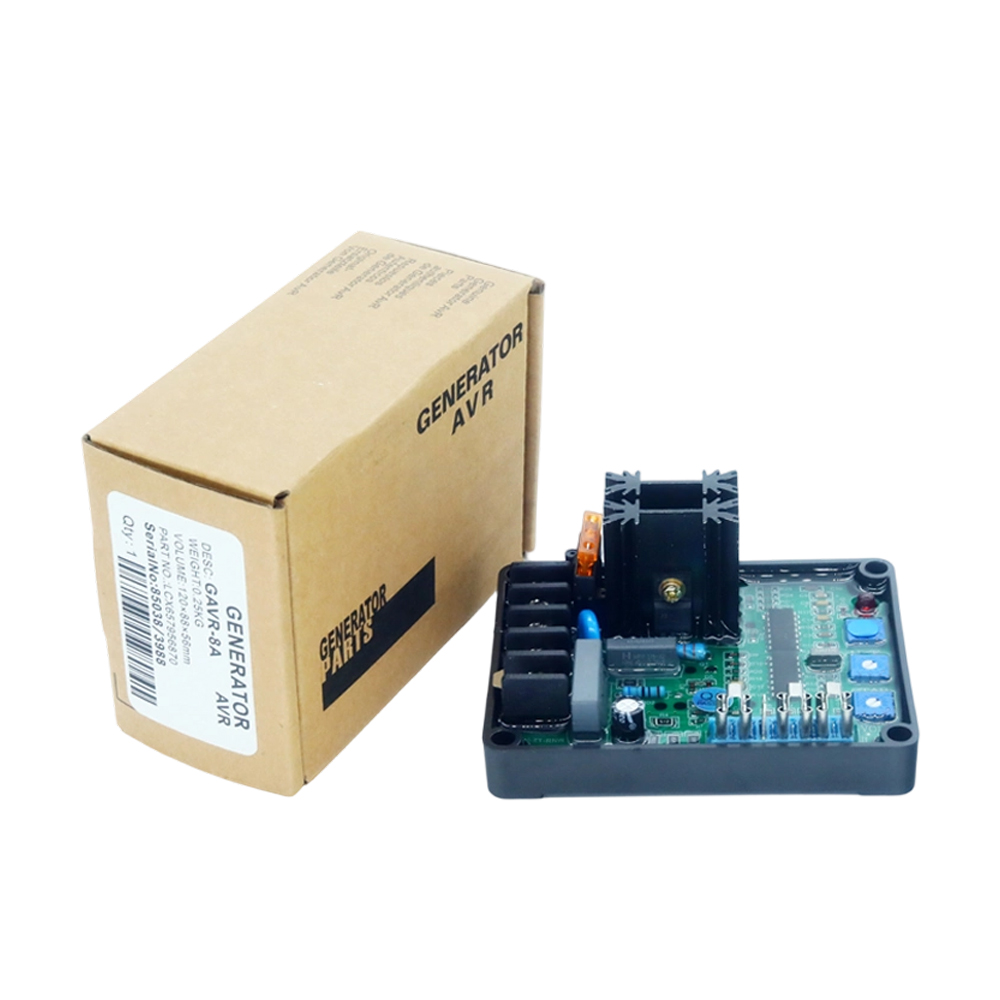
Essential Performance Criteria for Industrial Automatic Voltage Regulator Systems
What’s at stake
There are severe challenges regarding industrial sites and power quality. Problems include utility switching causing voltage distortion and getting overwhelming amount of vehicle frequency rifts above 15% THD. This results in overheating of transformers and misoperation of relays. This results in robotic system instability. This results in the plant system getting disrupted causing an hour of unplanned downtime resulting in a loss of over $200K (Ponemon Institute, 2022) making it the utmost priority for plants to control disturbances in real time. This is the reason why industrial-grade automatic voltage regulators must not only mitigate voltage interruptions and changes in the system's voltage, but also harmonics to provide uninterruptible service to PLCs (Programmable Logic Controller) and high-speed CNC machines and motion control systems.
Essential performance specifications are: <20 ms, ±0.5%, and THD ≤5%
There are 3 benchmarks that determine the viability of the system as an industrial solution. These include response time, precision control, and harmonics. This response time needs to be <20 ms to not cause a malfunction of the system during small disturbances of the voltage in the network. Stating the amount of pressure that is acceptable for control is set on precision control, ±0.5% for ensuring a low amount of errors of laser cutting and CNC milling. Control of THD in ≤5% is required to avoid multiple issues in the bank of capacitors, to stimulate the bearings inside the motors and to provide a standard control of the drift of the calibration of the wafer scanner. To control the drift of the calibration of the wafer scanner is a requirement of high-tech semiconductor fabs and this is why it is required to be in the standard IEEE 519-2022. Regulators that meet all 3 of these standards will reduce the number of failures related to the voltage of the system in the range of 70-78% (Electronics Journal, 2023)
The Strength and Environmental Resistance of Industrial Automatic Voltage Regulators
Operation under particulates, extreme temperatures (−25°C to +70°C), and mechanical vibrations
Industrial AVRs work in extreme conditions. These include airborne particulates in cement factories and thermal cycling in arctic mining. AVRs experience sustained mechanical vibrations (>5g RMS) near big compressors or generators. Units operate within ±0.5% regulation accuracy throughout temperatures of −25°C to +70°C, and resist ingress, condensation, and shock. Field data from desert and offshore deployments. These data confirm that IP54+ rated units fully operate after prolonged sandstorm and salt fog testing. There is thermal validation that shows compliant designs endure 1,200+ cycles between temperature extremes with no parameter drift or solder joint fatigue.
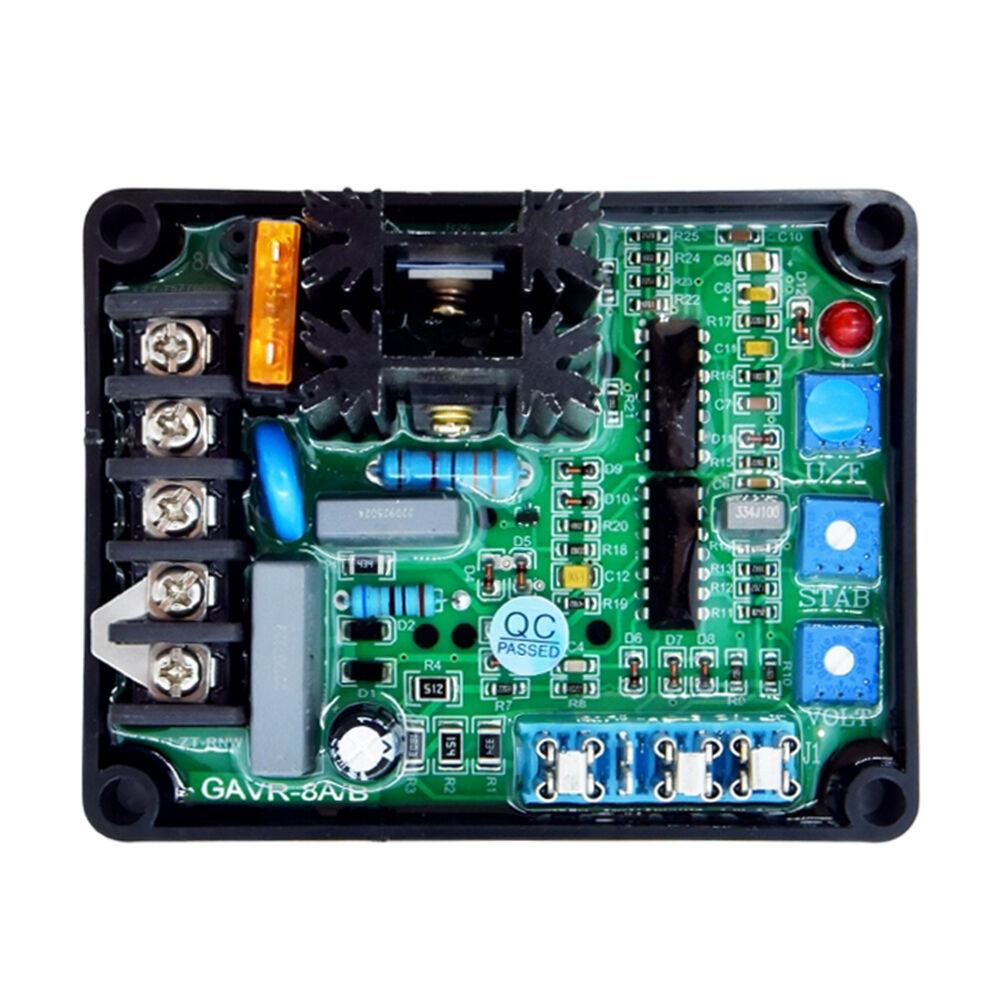
Design safeguards: IP54+ enclosures, conformal-coated circuitry, and (c):derated thermal management
Some designs IP54+ specify robust plans, however, robustness comes from its layered design IP54+ enclosures include a combination of gasketed seams and pressure-equalizing vents that block dust without building internal condensation. Boards are coated with either acrylic or silicone. These conformal coatings are truly trans-verified mucus and fit testing ASTM E-96 for humidity resistance up to 95% RH. Thermal design uses derated components (operating at ≤70% of maximum junction temperature), coupled with large, oversized, extruded aluminum heat sinks. Robust plans are expected to extend mean time between failures (MTBF) 40% in hot, industrial settings such as steel mills and kiln operations.
Stable Voltage Regulation During Dynamic Load and Generator Transients
Challenges of motor starting, generator paralleling, and microgrid islanding
Starting motors can demand current loads >600% of steady-state, leading to large voltage depressions that destabilize nearby equipment. The Generator paralleling may develop phase angle mismatches and can cause harmonics and destructive circulating currents >±5° of synchronous tolerance. In microgrid islanding, e.g. utility grid separation, the Automatic Voltage Regulator (AVR) without load shedding, black starting cascades the AVR to respond within a 200 ms time frame of >±2 Hz frequency disturbances to prevent load shedding, black starting cascades. Rapid transients, without adaptive compensation, propagate the transients through the control networks and damage to sensitive equipment.
Digital adaptive control: Real-time gain tuning and predictive transient suppression
The modern control system has state-of-the-art digital signal processing (DSP) and uses adaptive algorithm regulators with the proportional-integration-differentiation (PID) control scheme. In real time the regulators can adjust control gains based on instantaneous measurement of load system inertia and changes in system impedance. Predictive control implements a voltage slope, rate of change, and pattern recognition, to predict system instability. This results in a forced response control action that is preemptive and corrective, and in the control scheme voltage deviation of ±0.5%. The control system is also capable of maintaining voltage stability during generation system control, reconnection, of islanding control, and during extended time frames as required in UL 174 SA certified microgrid deployments.
The Integrated Protection Architecture with Modern Industrial Automatic Voltage Regulators multi-stage defense: MOV clamping, SCR crowbar, and smart overload shutdown.
The coordinated sequence of AVRs takes into account the full range of electrical threats and operates in defense. The primary protection uses metal oxide varistors (MOVs) to quickly clamp fast rising transients (such as a lightning strike up to 6 kV) in nanoseconds. Secondary protection uses silicon controlled rectifiers (SCR’s) crowbar circuits. When prolonged overvoltage conditions exist that are above 120% nominal, the SCR’s dump the fault current to ground in less than 2 milliseconds and avoid insulation failure. The final stage of protection uses microprocessor controlled overload logic and monitors the current. If demand exceeds 110% of the rated capacity, the logic will initiate load shedding to prevent thermal run-away in motors and transformers.
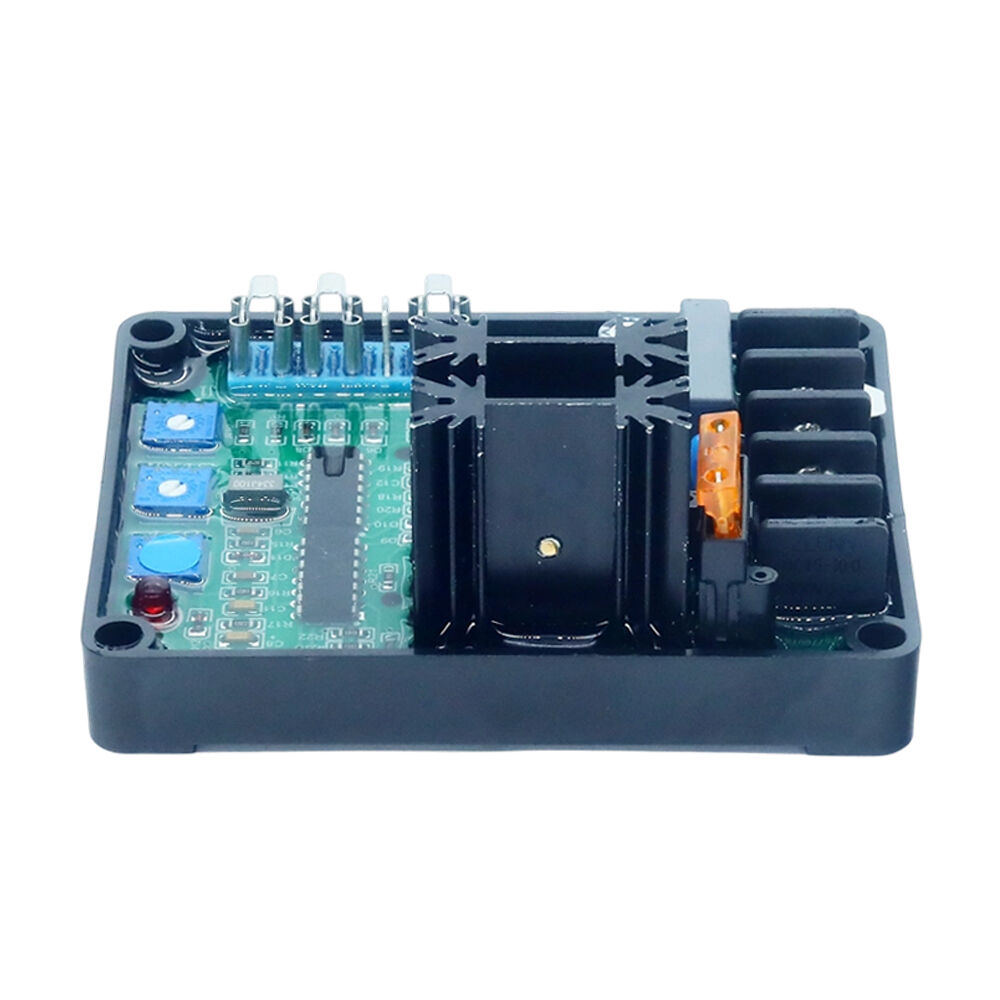
Primary Protection Stage: Trigger Threshold: Protection Time: Primary Function
MOV Clamping: > 130% nominal voltage: < 1ns: Absorb transient energy
SCR Crowbar: > 120% sustained voltage: ≤ 2ms: Divert fault current
Smart Shutdown: > 110% current rating: < 50ms: Progressive load reduction
This multi-layered method is intended to satisfy the ANSI/IEEE C62.41 Categories C (industrial) surge immunity and have a recorded field data of 89% less voltage-related fails versus single-stage protectors during 18 months of 42 tracked sites in manufacturing.
FAQ
What is the primary function of industrial automatic voltage regulator (AVR)?
Industrial AVR functions in correcting voltage sags and surges. The AVR also filters, albeit in a active manner, the harmonics that are present in the electrical system and thus provides a controlled voltage to the system and ensures a stable supply of power to the system.
Why is response time important for AVRs when used in industrial applications?
In high-speed manufacturing processes, voltage sags occur and the manufacturing processes experience brief interruptions. In order to avoid dropping out the equipment during these sags, it is important to maintain voltage response time in less than 20 ms.
What type of environmental conditions beyond the industrial environment must AVRs be developed to function?
Dusty environment, extreme temperature conditions (-25 to +70°C), and mechanical vibrations where it is required to perform in a precise and reliable manner.
Describe how new AVRs deal with dynamic loads, and during non-steady state conditions.
The new generation of AVRs has a digital adaptive control system, and with the help of DSP-based controllers, adjusts and stabilizes mechanical elements to absorb system transients, depending on the load and system impedance.
What AVRs new features are related to protection?
New generation AVRs are equipped with multi-layered protection architecture, which includes transient suppression with MOV clamps, overvoltage protection with crowbar SCR circuits, and intelligent overload shutdown for excessive current control.

