
 EN
EN



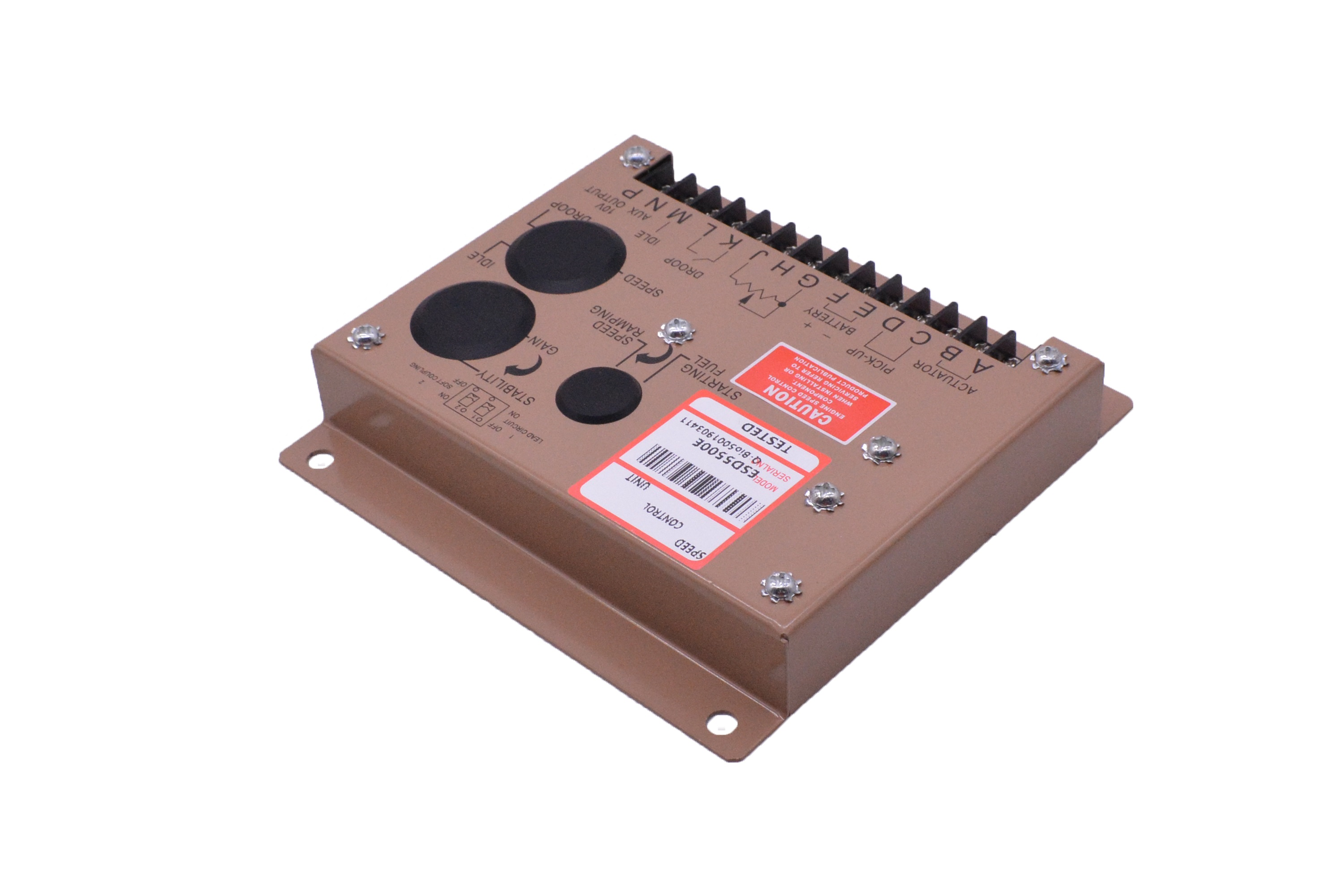
The Feedback Control Principle in Its Basic Form
Closed-loop operation: how a governor can modify output based on feedback in real-time
A governor is a device that keeps a constant engine RPM using closed-loop control and monitoring systems like magnetic pickups or other tachometer devices to measure actual rotational speed. The governor controller is a device that, for loads that run away, monitors how actual speed deviates from a preset target. At that point, the controller calculates a corrective action and sends a command to throttle or fuel actuator devices. For example, a 5% RPM drop due to the load occurs and fuel is increased instantaneously with the passage of milliseconds. This feedback cycle solves the control problem in closed-loop systems and the feedback signals compensate for additional unaccounted variables like the friction or temperature drift that affects the speed of the governor. Feedback speed control is extremely important for the applications of generators where RPM deviations of only ±0.25% will cause variations in the power frequency.
The three basic elements of a governor that are necessary for it to function in a stable manner
The components needed for a stable speed control system have the following three basic elements that are interdependent.
-the Setpoint: calibrated target RPM (e.g., 1800 RPM for 60 Hz generators)
-the Error Signal: the quantifiable measured difference, that is actively and continuously (at a rate of 50–100 times per second) being calculated
-the Actuation: which can be mechanical, hydraulic, or electronic systems that performs the command and fuel (throttle) control adjustments (by up to 70% reduction in fuel control system) due to an overspeed condition.
The complete cycle of the governor device operates in three interdependent components concurrently. A PID (Proportional-Integral-Derivative) controller minimizes the system response time and overall performance of the governor while achieving an overall speed deviation of less than 2% with 0 to 100% load variations to control the governor.
Centrifugal Speed Governor Mechanics: Measuring Speed by Balance of Forces
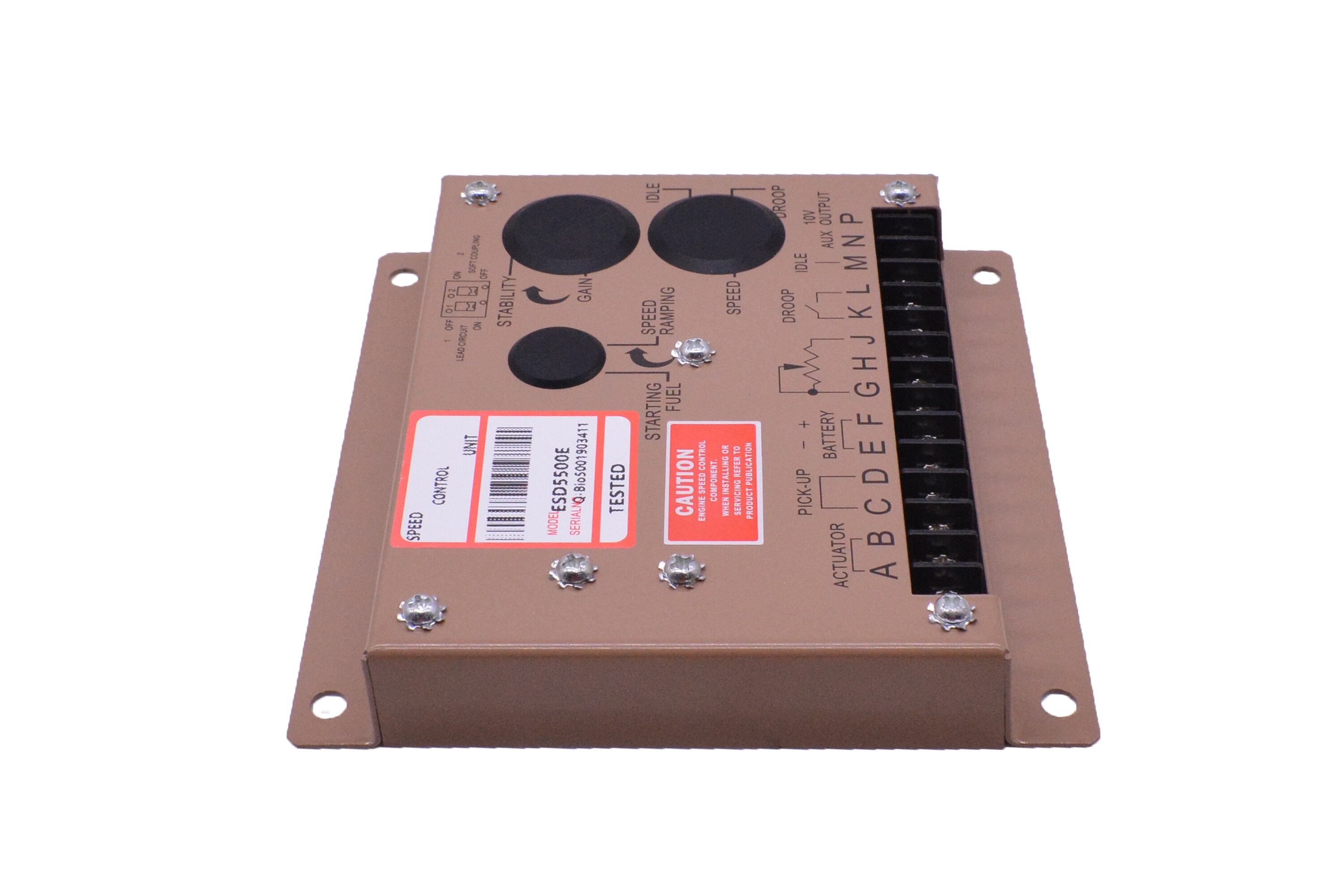
Flyweights: Centrifugal Force vs. Spring Force at Different RPMs
Flyweights rotate to produce centrifugal force proportional to the square of the engine RPM. At higher speeds, this force overcomes the net force of the spring. As a result, the weights move vertically. At the point of equilibrium, where the centrifugal force is equal to the net force of the spring, the vertical position of the flyweights corresponds to a set speed. For industrial governors, at 3,000 RPM, centrifugal force is 15-20% greater than the net spring force. Because of this, a proportional response is guaranteed, meaning that when there is a spike in RPM, a corrective action is initiated in less than 0.2 seconds due to the fundamental principle of force balance in speed regulation.
Mechanical linkages and throttle control: Motion to fuel modulation translation
The vertical movement of the flyweights directly pushes a throttle arm through a sleeve. This is a pure mechanical translation of motion, and in turn, a reduction of fuel flow by 8%-12% for every 1 mm of sleeve movement on diesel engines. A leverage ratio of about 4:1 to 6:1 is typical in this case. The most important factor of this design is that it is absolutely fail-safe and requires no external source of power. The kinetic energy of the rotating assembly is more than enough to control the combustion and maintain a constant speed.
Analysis of Speed Governor Response to Over-speed Conditions
Speed governor responds to over-speed conditions where the braking action of the governor is related to the rate of the over-speed condition.
The primary goal here is to maintain a level of deceleration, as over-speed conditions may occur as a result of increased load on the governor as the engine operates with a governor, and provide load on the application that is greater than the designed governor load.
Current Limitations of Speed Governors
The limitations of traditional mechanical speed governors are the inherent limitations of precision in the mechanical governor, of the time it takes for the mechanical governor to respond to the load change and the speed at which the governor can respond to the load change. Mechanical governors utilize flyweight systems and spring systems which introduce a significant amount of mechanical inertia to the governor, which in turn results in the governor timing a response to the correction that is needed in the range of approximately (300 – 500 milliseconds). This result signifies that the governor will respond to any load change that is beyond the design criteria of approximately (1 – 3%) and the speed governor will have a limited maximum speed.
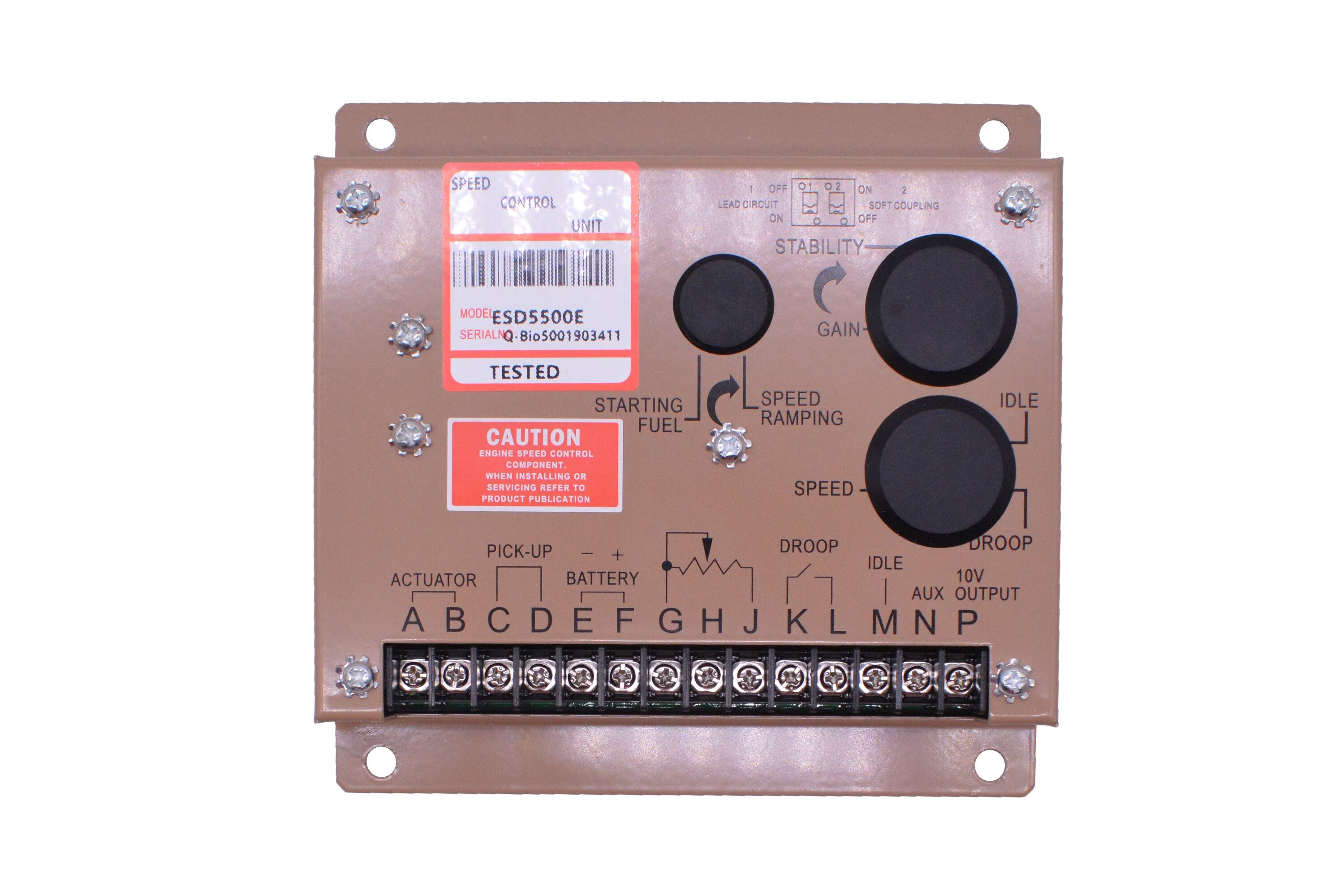
Electronic governors expand the boundaries of the governor system by using microprocessor controlled governor system corrections in the order of 50 milliseconds. This offers an unprecedented speed control accuracy of ± 0.25% of target speed. This provides control of speed under loss of load shifts as well. Such governor systems also utilize technologies such as GPS and Intelligent Speed Assistance (ISA) for geofenced locations (school zones, works zones) where maximum speed control is done automatically without any action from the driver. Telemetry (specially diagnostic) is also provided for predictive maintenance, fuel savings of 4 – 7% is also reported in most of the fleet efficiency studies published.
Frequently Asked Questions (FAQ)
What is a speed governor?
A speed governor is a system that holds an engine’s RPM’s constant based on the engine load by regulating the throttle position.
How does a centrifugal speed governor work?
In a centrifugal speed governor, the speed increase triggers the flyweights aerosprung in balance. This initiates a throttle response that is proportional to the triggered spring tension.
What are the limitations of mechanical speed governors?
Most mechanical speed governors have limitations brought about by the mechanical systems’ inertia, less accuracy, slower response, and all in comparison to electronic speed governors.
How do electronic speed governors improve upon mechanical systems?
Better response time, higher precision, and adaptability is also seen in electronic speed governors in comparison to mechanical systems. These governors also offer systems speed control in various conditions with greater accuracy.

