
 EN
EN



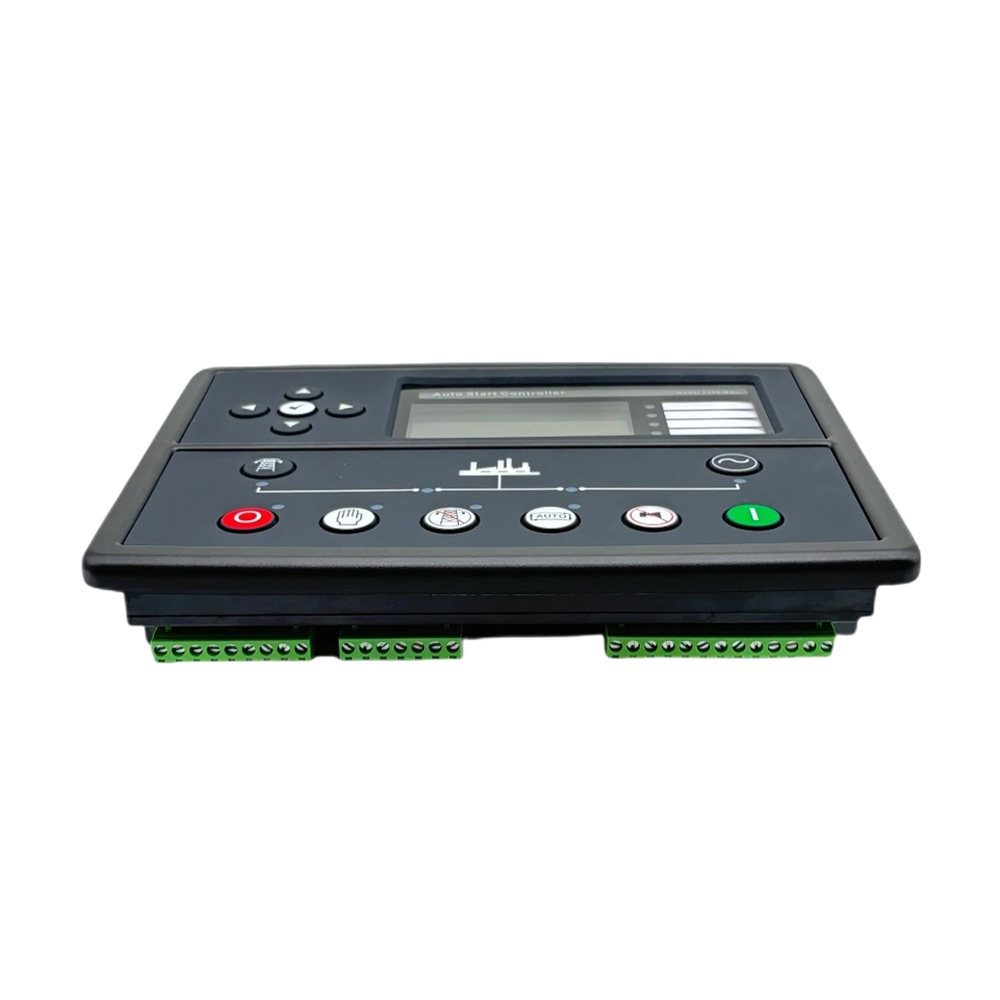
How Cross-Brand Compatibility is Achieved by Universal Generator Controllers
Through the use of a standardized excitation system and a unified signal interface, universal generator controllers manage compatibility in an environment where proprietary limitations exist, making versatility possible.
Excitation System Types Support: Shunt, PMG, and Auxiliary Winding
The primary starting point for universal compatibility is the support of all primary excitation methods and systems. Universal controllers can adjust and operate in:
Shunt excitation (more commonly found in portable generators) by controlling field current, relying on the residual magnetism
Permanent Magnet Generators (PMG) (found in industrial units) with isolated power circuits for excitation
Auxiliary windings (typically present in modern alternators) through adjustable feedback on voltage
Because of this degree of multi-mode support, a single controller can operate generators of multiple manufacturers. During operation, the controller can detect the excitation type through voltage sensing with zero manual configuration. Field testing shows a 98% compatibility with generators featuring the above methods, per the IEEE Std 115 and IEC 60034-1.
Standardized Logic for Voltage Regulation and Signal Interface
Universal controllers use sophisticated voltage regulation algorithms based on signals from:
- Analog voltage/frequency signals (0 to 5 V DC, or 4 to 20 mA, as per ISA-50.00.01 and IEC 61000-4-30)
- Digital communication protocols (i.e., Modbus RTU, CAN bus)
- Mechanical governor interface (via PWM signals for RPM control)
The regulation logic compares output voltage to reference values and adjusts in 20 ms response times, ensuring ±1% accuracy from reference values of 120 V/240 V. This strategy compensates for brand-specific signal differences. Interface adjustments are made by operators using dip switches or software, removing the need for physical modifications. As per EPRI's 2023 Grid Integration Benchmark Report, controllers that support IEC 61850-3 communication standards are expected to interoperate with ~90% of commercially available generators produced after 2015.
Brand-Specific Constraints to Universal Generator Controllers
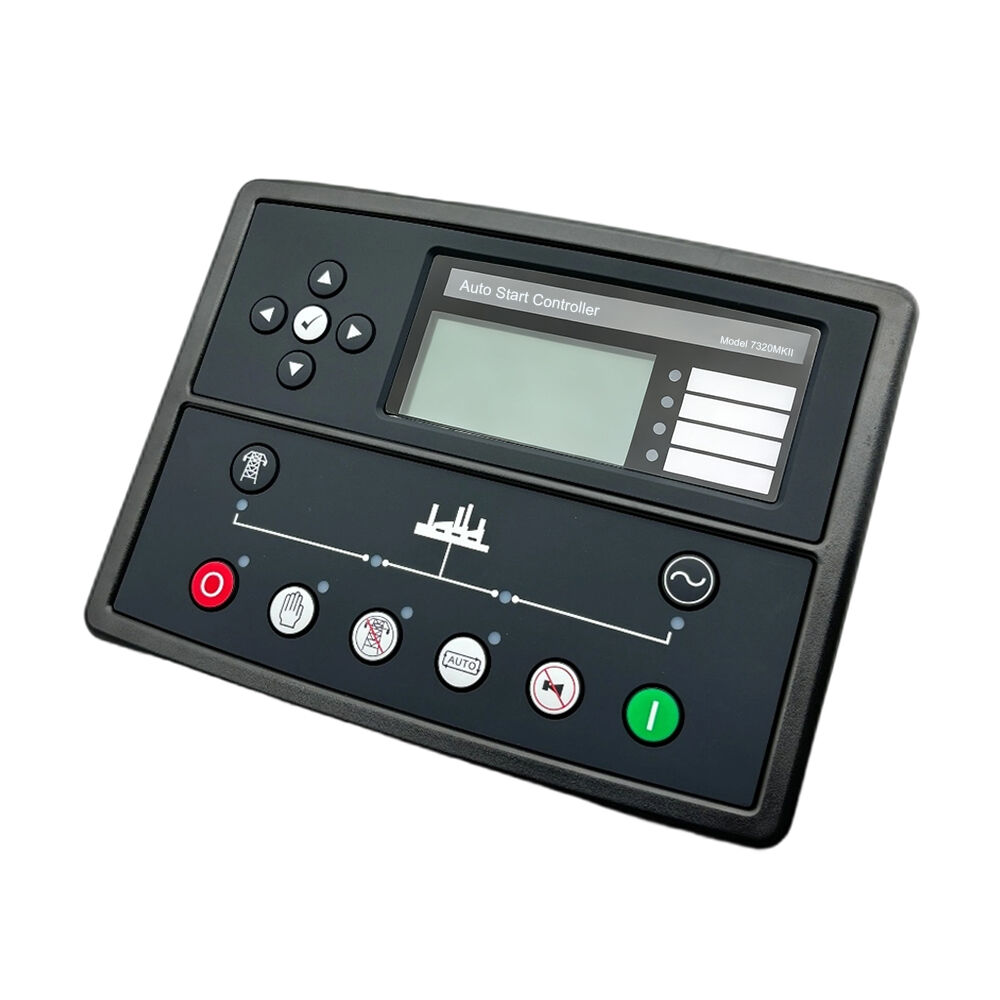
Legacy Protocols: Barriers with Kohler, Generac, and Cummins
Universal controllers encounter significant barriers while interfacing with legacy protocols from the aforementioned major brands. Older Kohler, Generac, and Cummins units adopt proprietary control structures that standard controllers interface with. These units utilize brand-specific data encoding, voltage signaling, and other methods that universal controllers cannot circumvent. Closed-loop CAN bus, for instance, used by Generac pre-2015 models, requires proprietary encrypted handshakes that 3rd party controllers lack. Likewise, Cummins PowerCommand 1.0 systems need a custom frequency modulation for synchronization. Trying to integrate control systems without using protocol translation units can lead to generator lockout, erratic voltage output, or both. Field studies show that nearly 68% of cross-brand compatibility failures are a result of legacy communication systems. This leaves operators with the option of either costly OEM retrofits or adapter replacement.
Universal vs. OEM Generator Controller: Performance, Cost, and Integration Realities
Trade-offs in Response Time, Harmonic Rejection, and Smart Diagnostics
Compared to OEM controllers, universal controllers have a programmed logical response in a grid-fluctuation event which makes them slower (average response time ≤150 ms). This constitutes a latency issue (average harmonic distortion 12-18% increased) compared to OEM controllers which leads to the breakdown of sensitive electronics to IEEE 519-2022 specifications. While universal controllers have basic fault diagnostics embedded, they generally lack more refined diagnostics like fuel system health monitoring and cylinder misfire detection proprietary to OEM firmware. These diagnostics are the result of collaborative integration between engine and generator over time. The average 23% saving on investment must be taken into account for these operational shortcomings especially on critical systems where time and distortion of the corrected waveform to the system provided by the generator is of the utmost priority.
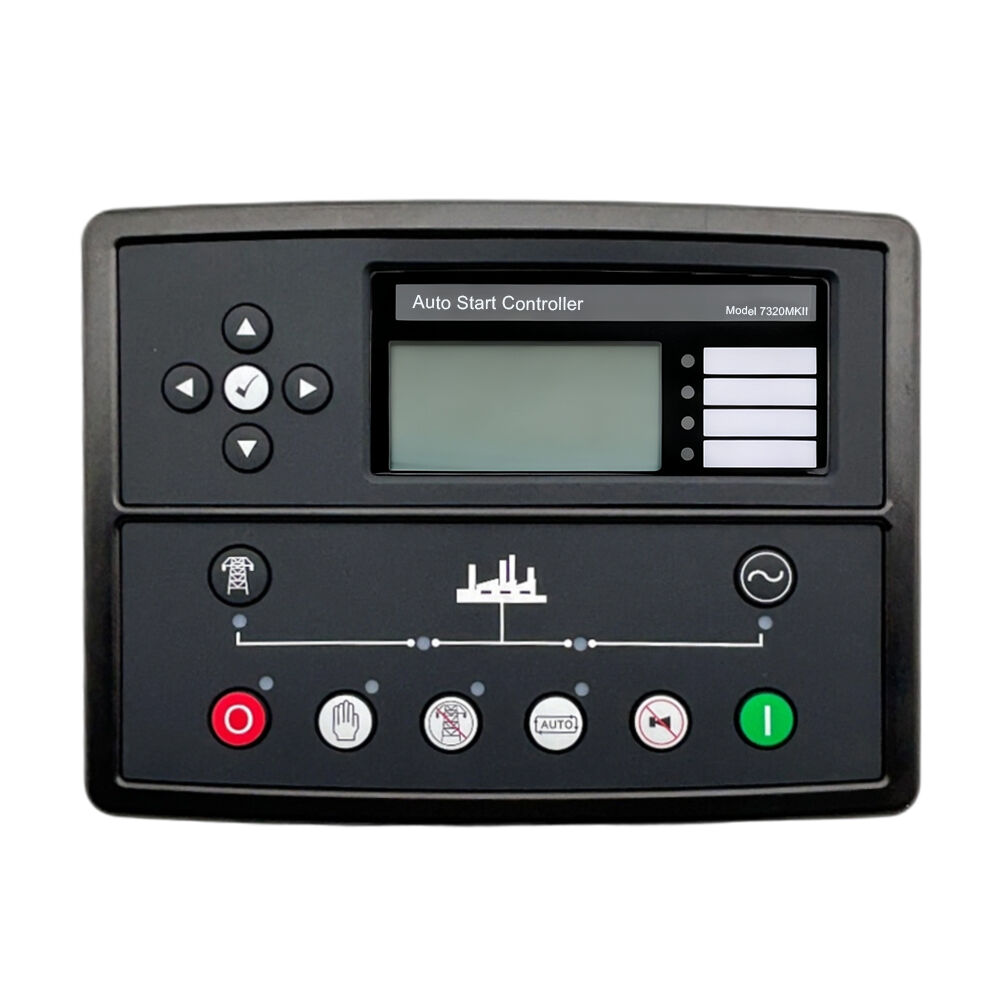
Validation Checklist: Voltage Sensing, Feedback Loop Integrity, and Field Testing Best Practices
Using universal controllers entails working with OEM controllers, and more precise predictive commissioning must be performed.
Protocol Support Proprietary CAN/J1939 Modbus RTU/SNMP (limited mapping)
Field tests include:
Staged load acceptance tests (25%, 50%, 100% increments) measuring voltage dip recovery
Harmonic spectrum analysis confirming >85% THD suppression below IEEE 519-2022 limits
72-hour endurance runs monitoring heat dissipation at rated kW output
Field trials consisting only of passive monitoring for the controlled load High fields of the plant. There are critical disturbances that fail to be recognized. These disturbances can be simulated with programmable load banks, so in accordance with NFPA 110 Annex D, validation should be done in the worst ambient conditions, including: high temperatures, full load transients, etc.
FAQ
What is a universal generator controller?
A universal generator controller manages the generators’ excitations systems and signal interfaces by brand. This allows the controller to manage the generators’ operations across brands.
Why can universal generator controllers have trouble with older models?
Older models have a proprietary communication systems. This means the universal controllers do not have the necessary hardware for communication, and thus can have compatibility problems.
In mission critical applications, are the universal controllers cost effective?
They do offer cost savings, however, in mission critical applications, the controllers do not have the advanced diagnostic and response capabilities. This can present challenges to the reliability for the applications.

