
 EN
EN



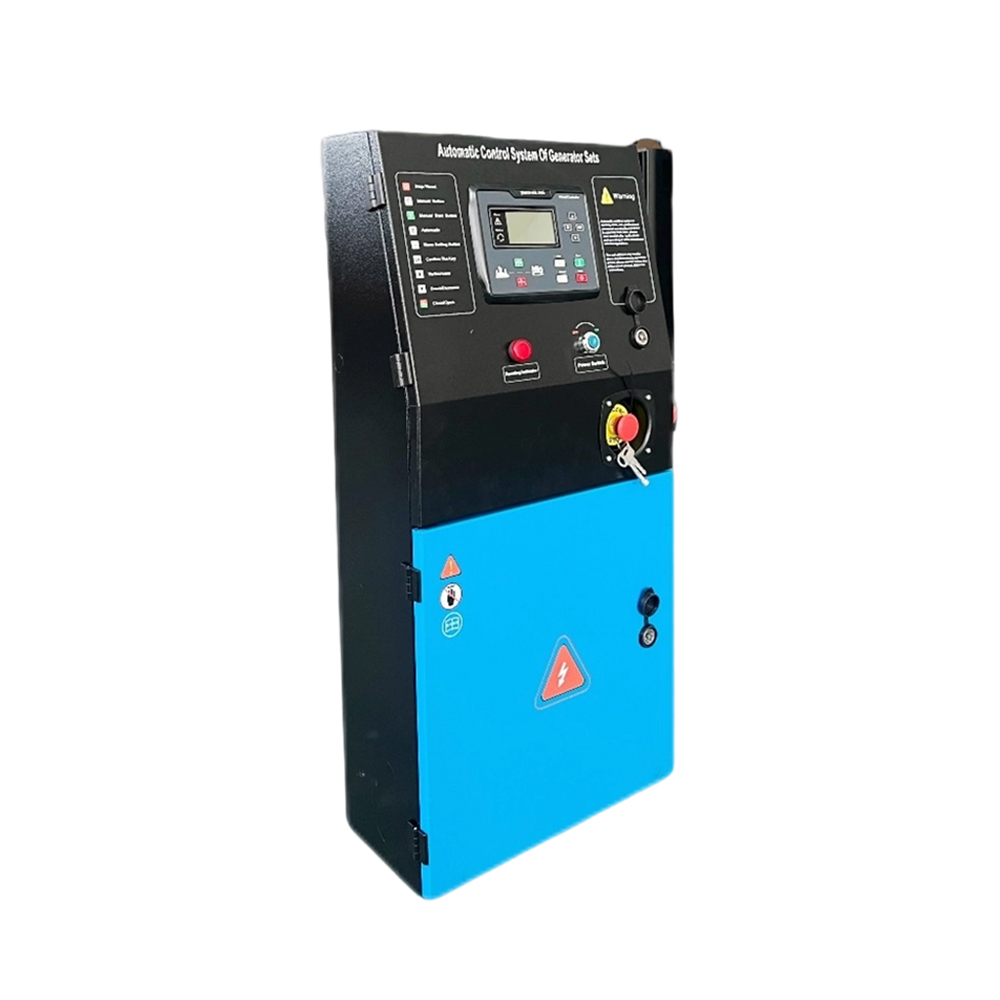
Understanding Speed Controller Fundamentals and Core Functions
What Is a Speed Controller and How Does It Work?
A speed controller is an electronic device that regulates the rotational speed of an electric motor by adjusting the power delivered to it. In industrial applications, it ensures consistent motor performance despite load fluctuations. The controller receives input—either from operator commands or sensor feedback—compares actual speed to a target setpoint, and dynamically adjusts voltage (for DC motors) or frequency and voltage (for AC motors) to correct any deviation. This closed-loop operation enables precise, stable speed control, improving energy efficiency, extending equipment life, and supporting consistent product quality.
Key Operational Principles: PWM, VFD, and Closed-Loop Control
Speed controllers rely on three foundational techniques to deliver responsive, accurate motor control. Pulse Width Modulation (PWM) rapidly switches power on and off at high frequency, varying the average voltage applied to the motor—ideal for brushed DC and BLDC applications. Variable Frequency Drives (VFDs) adjust both voltage and frequency in tandem to control AC induction motors, enabling smooth ramp-up/down and full-torque operation across the speed range. Closed-loop control integrates real-time feedback—typically from encoders, resolvers, or Hall-effect sensors—to continuously monitor speed and correct errors within milliseconds. Together, these principles allow modern controllers to maintain tight speed regulation (<±0.1% under steady load), deliver high starting torque, and suppress electrical noise—key requirements for demanding automation tasks.
Matching Speed Controller Specifications to Motor Requirements
Selecting a speed controller that aligns precisely with your motor’s electrical and mechanical specifications is essential for safe, efficient, and long-lasting operation. Mismatches risk inefficiency, thermal stress, instability, or outright failure. Two interdependent factors dominate this selection: electrical ratings and motor type compatibility.
Voltage, Current, and Power Rating Compatibility
A controller must supply the motor’s rated voltage and sustain its peak current draw—including inrush and overload conditions—without tripping or derating. Continuous current rating is non-negotiable; surge or stall current capability should exceed the motor’s worst-case demand by at least 15–20%. Power rating (in kW or HP) must also be matched: undersizing limits torque and acceleration, while oversizing adds cost, complexity, and potential control instability. Always cross-reference the controller’s continuous and intermittent ratings against the motor’s official datasheet—not nameplate values alone—as thermal derating curves and duty-cycle assumptions vary significantly between manufacturers.
Motor Type Considerations: DC, AC Induction, and BLDC
Motor technology dictates fundamental control architecture. Brushed DC motors operate on simple voltage regulation and require minimal feedback for basic speed control. AC induction motors depend on coordinated voltage-to-frequency (V/f) ratios or vector control—implemented via VFDs—to maintain magnetic flux and torque across speeds. Brushless DC (BLDC) and permanent magnet synchronous motors (PMSM) demand precise electronic commutation synchronized to rotor position, typically using encoder or sensorless back-EMF detection. Using a controller designed for one motor type on another will result in poor performance or damage—for example, applying a VFD to a brushed DC motor or running a BLDC controller without position feedback. Always validate motor-controller pairing against the manufacturer’s compatibility matrix before integration.
Evaluating Critical Performance and Integration Factors
Response Time, Precision, and Load Handling Capability
Industrial processes—from precision winding to high-inertia conveyance—demand controllers that respond quickly, regulate tightly, and remain stable under dynamic loads. Response time, typically measured as time to reach 90% of target speed after a step command, should be ≤50 ms for motion-critical applications. Speed regulation precision, expressed as maximum deviation from setpoint under varying load and temperature, should be ≤±0.2% for most automated systems—and tighter (≤±0.05%) where synchronization matters. Load handling capability reflects how well the controller sustains torque during sudden load changes; look for features like auto-torque boost, adaptive gain tuning, and robust current limiting. Real-world validation—such as thermal cycling tests or simulated load transients—provides more reliable insight than datasheet specs alone. Leading manufacturers publish test reports aligned with IEC 61800-3 for electromagnetic compatibility and IEC 60034-1 for motor performance correlation.
Communication Protocols and PLC/SCADA Compatibility
Seamless integration into modern automation architectures requires native support for industry-standard communication protocols. Modbus RTU/TCP remains widely used for basic parameter access and monitoring, while EtherNet/IP and PROFINET enable deterministic, real-time control in synchronized motion systems. CANopen suits distributed architectures with multiple drives, and OPC UA provides secure, platform-independent data modeling for IIoT and digital twin applications. Verify that the controller supports bidirectional data exchange—not just status reads—with PLCs and SCADA platforms, including fault logging, runtime diagnostics, and configurable alarm thresholds. Interoperability certified to IEC 61131-3 (for programming consistency) and conforming to ODVA, PI, or CiA profiles reduces commissioning time and enables scalable, future-proof system design.
Selecting a Reliable Speed Controller Supplier and Support Ecosystem
Technical fit is only half the equation—long-term reliability hinges on supplier capability and service depth. Prioritize vendors with proven industrial experience, ISO 9001-certified quality systems, and IEC 61800-compliant product development processes. Look for comprehensive after-sales infrastructure: 24/7 technical support staffed by application engineers—not call-center agents—and documented SLAs guaranteeing ≤4-hour response for critical issues. Spare parts availability is mission-critical: leading suppliers maintain ≥98% component readiness for standard models within 48 hours globally. Robust training programs—including hands-on commissioning workshops and troubleshooting certification—empower in-house teams to maximize uptime. Request third-party case studies validated in environments matching your scale, duty cycle, and regulatory context (e.g., food-grade washdown, hazardous area Class I Div 1). Finally, insist on minimum 2-year warranties covering both electronics and firmware, with transparent upgrade paths for cybersecurity patches and feature enhancements.
FAQ
What is the primary function of a speed controller?
A speed controller regulates the rotational speed of an electric motor by adjusting the power delivered to it, ensuring stable operation and consistent performance.
What are the key techniques used in speed controllers?
The primary techniques are Pulse Width Modulation (PWM), Variable Frequency Drives (VFDs), and closed-loop control using real-time feedback.
Why is matching controller specifications to the motor important?
Mismatched specifications can lead to inefficiency, thermal stress, instability, or failure. Accurate pairing guarantees safe and efficient system operation.
What role do communication protocols play in speed controllers?
Communication protocols enable seamless integration with PLCs and SCADA systems for real-time control, monitoring, fault logging, and diagnostics.
How do I evaluate a reliable speed controller supplier?
Focus on proven industrial experience, quality certifications, responsive technical support, spare parts availability, and robust training programs.

