
 EN


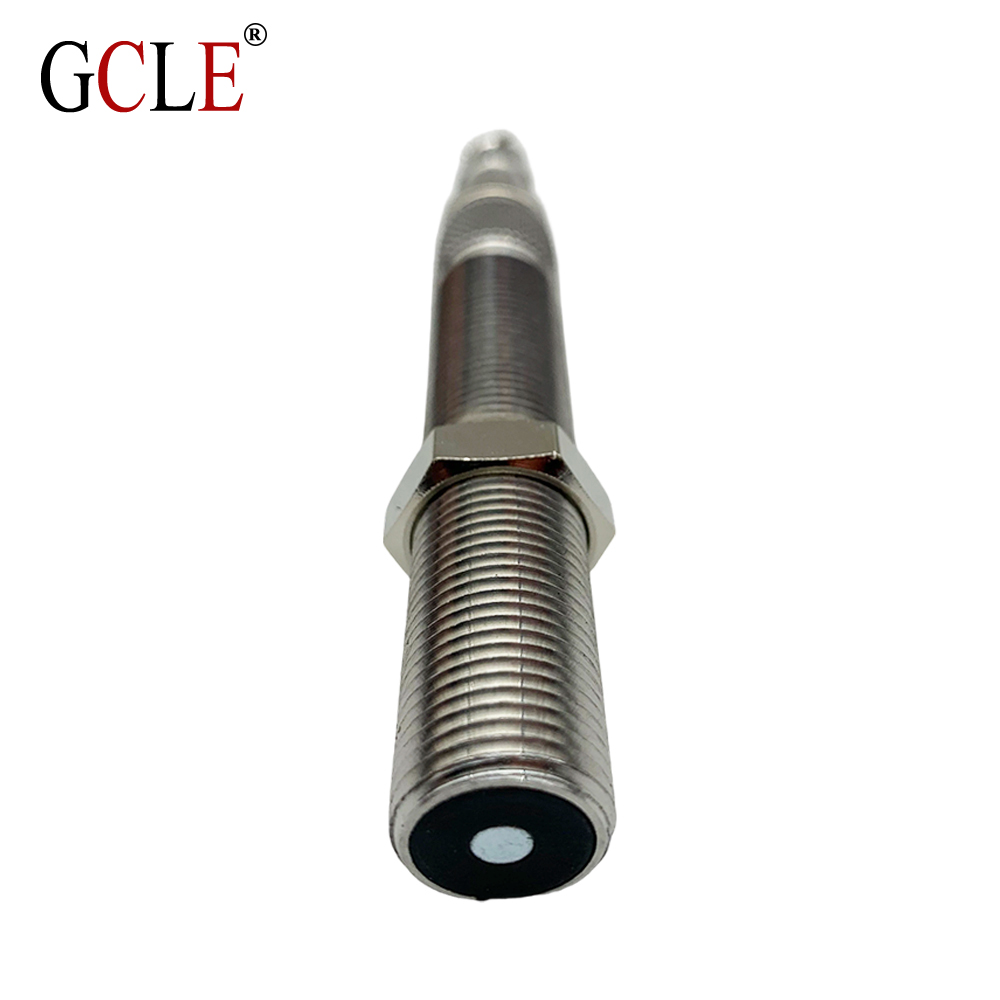
How Generator Actuators Achieve Extended Service Life in Demanding Conditions
A generator actuator that fails mid-operation leaves the engine unable to regulate fuel delivery — the generator either shuts down or runs uncontrolled. In backup power scenarios, actuator reliability directly equals power availability. The question procurement engineers ask is whether modern electronic actuators deliver the durability their specifications promise.
The Design Factors That Determine Actuator Longevity
Electronic Actuation vs. Mechanical Linkage Wear
Mechanical actuators rely on levers, springs, and linkages translating governor flyweight movement into fuel rack position. Each pivot introduces a wear surface. After approximately 5,000–8,000 operating hours, accumulated pivot wear creates enough free play that the actuator cannot position the fuel rack precisely — the engine hunts, smokes, or fails to accept load.
Electronic generator actuators eliminate most wear points. A DC linear or rotary motor driven by a PWM (pulse-width modulation) signal positions the fuel rack directly, with only a single output shaft bearing as a wear surface. The motor's brushless design — standard in modern units — removes commutator and brush wear entirely. The expected bearing life at rated load exceeds 30,000 hours, and the electronic driver circuit has a mean time between failures (MTBF) exceeding 50,000 hours under typical operating temperatures.
Ningde Dragon Technology's generator actuators are engineered for heavy-duty operation with high-precision, fast-response positioning. The actuator motor assembly is sealed to IP54 or higher, protecting against dust ingress and water spray — environmental factors that accelerate mechanical linkage corrosion in open-frame generator installations.
Why Actuator Failures Occur and How to Prevent Them
The most common actuator failure is not the motor or driver circuit — it is the feedback sensor. Most electronic actuators use a built-in position sensor (typically a Hall-effect or potentiometer type) that reports actual fuel rack position back to the speed governor for closed-loop control. When this sensor fails — due to vibration-induced connection fatigue, moisture ingress, or exceeding its rated temperature range — the governor loses position feedback and defaults to a fixed fuel setting. The generator enters a degraded operating mode where speed control becomes sluggish and load acceptance is compromised.
Prevention is straightforward: annual inspection of the sensor connector for corrosion, verification of the actuator's full-range movement during generator service, and replacement of the integrated position sensor — a modular component on well-designed actuators — at 10,000-hour intervals regardless of apparent condition. The actuator motor itself, properly protected from contamination and not overloaded, should outlast the generator set's economic life.
Environmental Stress Factors
Temperature extremes stress actuator electronics more than mechanics. The driver circuit board, typically housed in the actuator body, contains electrolytic capacitors whose lifespan halves for every 10°C increase above their rated temperature. An actuator rated for 85°C ambient that operates continuously at 75°C in a generator enclosure may experience capacitor failure within 5–7 years instead of 10–12. Generator enclosures in tropical climates should include ventilation fans directed at the actuator and governor module to maintain internal temperatures below 60°C.
Vibration tolerance is engineered into the actuator mounting design. Generators typically produce vibration levels of 5–15 mm/s RMS at the engine block. The actuator mounting bracket should include vibration-isolating rubber bushings that reduce transmitted vibration to below 3 mm/s at the actuator body — within the tolerance that prevents connector fretting and internal solder joint fatigue.
A Mining Operation's Actuator Reliability Improvement
A mining company operating 12 diesel generator sets at a remote site in Western Australia experienced six actuator failures over an 18-month period. The generators ran continuously in a dusty environment with ambient temperatures reaching 48°C during summer. Investigation revealed that all six failures involved the integrated position feedback sensor — fine dust had penetrated the actuator's ventilation port and accumulated on the sensor's resistive track, causing intermittent signal loss.
The mining company replaced the failed units with sealed, IP65-rated generator actuators from Ningde Dragon Technology and installed secondary dust filters on the generator enclosure air intakes. The new actuators have operated for over 8,000 hours without a single feedback sensor failure. The maintenance team added quarterly actuator connector inspection to the preventive maintenance schedule, catching two minor corrosion incidents before they progressed to signal loss.
Frequently Asked Questions
What is the typical service life of an electronic generator actuator?
Under normal operating conditions, an electronic generator actuator lasts 30,000–50,000 hours before the output bearing reaches its rated life. The position feedback sensor may require replacement at 10,000–15,000 hours. Ningde Dragon Technology's actuators are designed for long service intervals in heavy-duty applications.
Can a failed actuator cause generator overspeed?
Yes. If the actuator sticks in the full-fuel position, the governor cannot reduce fuel delivery and the engine overspeeds. This is rare with electronic actuators, which fail to a spring-return minimum-fuel position by design, but mechanical actuator linkage binding can hold the fuel rack open.
How to test actuator response during routine maintenance?
Command a step change from idle to rated speed while monitoring RPM with an external tachometer. The actuator should position the fuel rack to achieve rated speed within 2–5 seconds without overshoot exceeding 5%. Sluggish response or overshoot indicates actuator friction or feedback sensor degradation.
What is the difference between a linear and rotary generator actuator?
Linear actuators move the fuel rack through a direct push-pull action, suitable for most generator applications. Rotary actuators provide angular movement and are typically used where the fuel injection pump requires rotational input. Both types are available from supplier partners like Ningde Dragon Technology.
Does actuator response time affect generator frequency quality?
Yes. An actuator response time under 50 milliseconds enables the governor to correct frequency deviations before they become noticeable. Actuators slower than 100 milliseconds produce visible frequency droop when large loads connect, potentially causing equipment trips.
What maintenance does an electronic actuator require?
Annual connector inspection, full-range movement verification, and cleaning of ventilation ports. The position feedback sensor should be tested for linearity at 5,000-hour intervals using the governor's diagnostic mode. No internal lubrication is required for brushless electronic actuators.

