
 EN


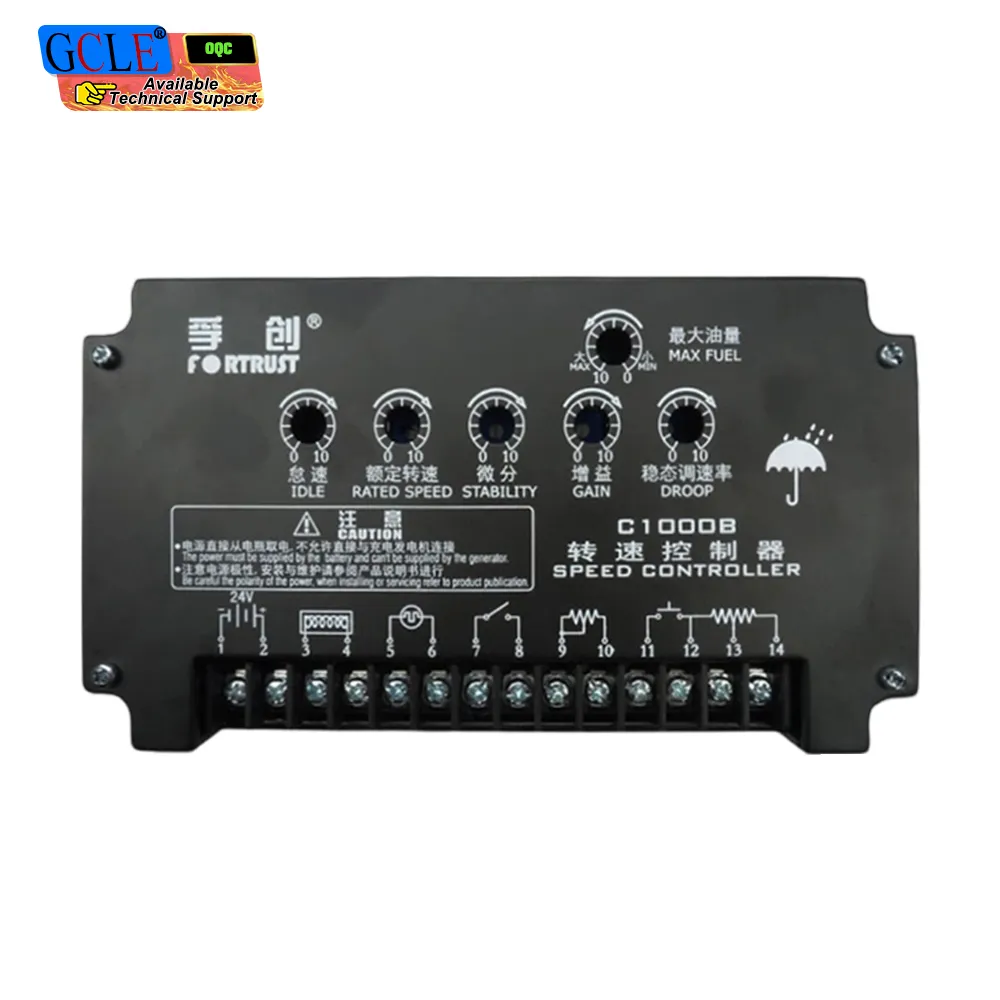
A Governing Problem at a Remote Site
A telecom site on a windy coast kept tripping its inverter because the genset frequency wandered whenever the load stepped. The speed controller was set too soft, so the engine lagged on every change and the inverter shut down to protect itself. After a field tune, the speed controller held frequency within a tight band and the site rode through load steps without a single trip, which ended months of late-night calls.
The frequency drift
The frequency drift showed up first as flicker in the lights, then as inverter faults during a pump start. The speed controller log showed a slow recovery after each step, which pointed to gain that was set too low. Raising the speed controller response closed the gap and removed the nuisance trips. A step-load test on site proved the fix instead of guessing, and the speed controller has held since.
The hidden mechanical fault
Tightening the loop also revealed a tired actuator linkage that the speed controller had been masking with extra fuel. Once the speed controller was stable, the lag in the linkage became visible and was replaced. A speed controller can hide a weak mechanical end only for so long. Fixing the linkage let the speed controller use less fuel and recover even faster, which also cut the smoke the set used to make on load steps.
The site manager also began logging fuel use per run, which exposed how much the worn linkage had been costing. With the speed controller tuned and the linkage freed, the set burned less fuel on the same load and recovered faster after each step. That saving paid for the service call within a month. The speed controller data made the benefit visible instead of a feeling, and the operator now trusts the numbers during budget talks. That trust has made the step-load test a standing item rather than an argument.
Risks of Poor Speed Control
Frequency and load mismatch
Frequency and load mismatch is the first risk. When a speed controller cannot hold RPM, frequency moves with it, and clocks, inverters, and motors drift or fault. A set that bogs on step load can stall a pump or drop a critical feeder, turning a small govern error into a real outage. A tight speed controller band keeps those loads calm and keeps the site within tolerance.
Wear from hunting
Wear from hunting is the second risk. A speed controller that oscillates keeps moving the actuator and the fuel rack, which wears parts and wastes fuel. Constant hunt also heats the engine unevenly and shortens life. A steady speed controller keeps both the load and the machine calm. Catching hunt early with a step-load check spares the actuator and the fuel system downstream.
How a Speed Controller Holds RPM
Feedback and actuator
Feedback and actuator form the loop. The speed controller reads engine speed from a magnetic pickup or crank signal and compares it to the set point, then drives the actuator to add or cut fuel. If speed drops, the speed controller opens the rack; if it rises, it backs off. That constant correction is what pins RPM. The quality of the speed controller reading decides how tightly the engine can be held.
Droop versus isochronous
Droop versus isochronous is the main mode choice. A droop speed controller lets speed fall slightly as load rises, which suits paralleled sets that share by speed slope. An isochronous speed controller holds one speed regardless of load, which suits a standalone set feeding sensitive gear. Picking the speed controller mode shapes how the plant behaves under change. Mixing modes on one bus is the usual cause of unstable load sharing.
Standards and Care for Engine Speed
Governing classes to meet
ISO 8528-5 sets governing classes for generating sets, from loose to tight, and it tells what a speed controller must achieve at steady and transient load. IEC 60034 covers the machine the speed controller governs, and NFPA 110 demands the set reach speed fast for emergency use. A speed controller should meet the class the application requires. Specifying the class up front avoids a set that passes start but fails under real step loads.
Setup, inspect and tune
Setup, inspect and tune with care. The speed controller gain and stability must match the engine's response, not a generic default, and the actuator linkage should be free with no slack. A yearly check of speed band under step load catches drift before it trips a load. Suppliers such as GCL E list speed controller kits by engine model so the gain range fits the set from the start. A logged step-load test is the best proof the speed controller is still in tune.
Keeping the gain and stability values on a tag inside the enclosure saves a redo if the speed controller is ever swapped. A short note with the engine model and the measured step-load band gives the next tech a starting point. The site now runs the step-load test at every service and files the result, so a slow drift shows up long before it trips the inverter. That habit turned the speed controller from a mystery box into a checked item on the maintenance list, and it means fewer midnight calls. The operator now reviews that band alongside the monthly run hours, which keeps the set honest through the busy season.
Frequently Asked Questions
Question: What does a speed controller actually control?
Answer: A speed controller holds engine RPM by reading speed and moving the fuel actuator to match a set point. The speed controller keeps frequency steady as load changes. Without it, the engine would slow under load or run away with none.
Question: Droop or isochronous, which is better?
Answer: A droop speed controller shares load well between paralleled sets, while an isochronous speed controller holds one speed for standalone use. The right speed controller mode depends on whether the set runs alone or with others. Mixed modes cause unstable sharing.
Question: Why does the engine hunt after a tune?
Answer: Hunting means the speed controller gain is too high or the actuator has slack, so correction overshoots. Lower the speed controller gain or fix the linkage, then retest under step load. A stable speed controller should settle without visible swing.
Question: Can a speed controller fix a weak engine?
Answer: No. A speed controller manages fuel to a set speed but cannot add power the engine lacks. If the speed controller cannot hold RPM under load, the engine or its fuel system is the real limit. The speed controller only reveals the weakness.
Question: How is a speed controller tested?
Answer: Apply a step load and watch frequency recovery with a meter or the speed controller log, checking the band against ISO 8528 class. A good speed controller settles quickly without sustained hunt. Annual step-load checks catch slow drift.
Question: Does a speed controller need maintenance?
Answer: The speed controller itself is electronic and needs little, but the actuator and linkage it drives need inspection for slack and wear. A sticky linkage makes the speed controller hunt and wear faster. Keep the mechanical end tight and the speed controller stays calm.

